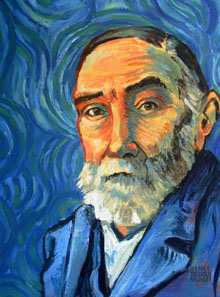
Rousseau, On the Social Contract


Especially important passages are highlighted in blue.

Comments by Prof. Moody are in a smaller rusty-red font like this

Quotations from other primary works or commentators is in blue like this.

.

Apart from the Social Contract, Rousseau’s major works are Emile and A Discourse on the Origins of Inequality. A short bibliography of recommended works on Rousseau includes:

Ernst Cassirer, The Question of Jean-Jacques Rousseau, Columbia, 1954

John Charvet, The Social Problem in the Philosophy of Rousseau, Cambridge, 1974

N. Fermon, Domesticating Passions: Rousseau, Woman, and Nation, Wesleyan, 1997

Clifford Orwin & Nathan Tarcov, eds. The Legacy of Rousseau, Chicago, 1997

Andrew Levine, The General Will: Rousseau, Marx, Communism, Cambridge, 1993

Roger Masters, The Political Philosophy of Jean-Jacques Rousseau, Princeton, 1968

James Miller, Rousseau: Dreamer of Democracy, Yale, 1984

John Rawls, Lectures on the History of Political Philosophy, Harvard, 2007

Patrick Riley, The Cambridge Companion to Rousseau, Cambridge, 2001

Patrick Riley, Will and Political Legitimacy, Harvard, 1982

Joel Schwartz, The Sexual Politics of Jean-Jacques Rousseau, Chicago, 1984

Judith Shklar, Men and Citizens, Cambridge, 1969

Robert Wokler, ed. Rousseau and Liberty, Manchester, 1995


Works which place Rousseau in the context of French political thought, especially his influence on the French Revolution:

Carol Blum, Rousseau and the Republic of Virtue, Cornell, 1986

Nannerl Keohane, Philosophy and the State in France, Princeton, 1980

Joan McDonald, Rousseau and the French Revolution, Athlone, 1965


A fine biography has been written by Maurice Cranston in 3 volumes

Vol 1: Jean-Jacques

Vol 2: The Noble Savage

Vol 3: The Solitary Self

Viking, 1983-1997

And there is Rousseau’s classic autobiography, the Confessions.


ON THE

SOCIAL CONTRACT,

OR

PRINCIPLES

OF

POLITICAL RIGHT


By J.-J. Rousseau,

Citizen of Geneva


-foederis aequas

Dicamus leges

--Aeneid, XI

Amsterdam, 1762

Table of Contents

Book I: Inquiring how man passed from the state of nature to the civil state, and what the essential conditions of the compact are.

Subject of this first book
On the First Societies
On the Right of the Strongest
On Slavery
That it is always Necessary to Go Back to a First Convention
On the Social Compact
On the Sovereign
On the Civil State
On Real Estate

Book II: Discussing legislation

That Sovereignty is Inalienable
That Sovereignty is Indivisible
Whether the General Will Can Err
On the Limits of the Sovereign Power
On the Right of Life and Death
On Law
On the Legislator
On the People
On the People-Continued
On Various Systems of Legislation
Classifications of Laws

Book III: Discussing political laws: that is, the form of the government

On Government in General
On the Principle that Constitutes the Various Forms of Government
Classification of Governments
On Democracy
On Aristocracy
On Monarchy
On Mixed Government
That All Forms of Government Are Not Suited to All Countries
On the Signs of a Good Government
On the Abuse of Government and Its Tendency to Degenerate
On the Death of the Body Politic
How the Sovereign Authority is Maintained
How the Sovereign Authority is Maintained—continued
On Deputies or Representatives
That the Institution of the Government is Not a Contract
On the Institution of the Government
The Way to Prevent Usurpations by the Government
Book Four has been deleted.

------------------------------------------------------------------------------------------

FOREWORD

This little treatise is part of a longer work I undertook some time ago without taking stock of my abilities, and have long since abandoned. Of the various selections that could have been drawn from what had been completed, this is the most considerable, and, it appears to me, the one least unworthy of being offered to the public. The rest no longer exists.


ON THE SOCIAL CONTRACT

BOOK I

I want to inquire whether there can be some legitimate and sure rule of administration in the civil order, taking men as they are and laws as they might be. I will always try in this inquiry to bring together what right permits with what interest prescribes, so that justice and utility do not find themselves at odds with one another.

An ideal government will be legitimate: it will have the right to rule and citizens will have the duty to obey.
An ideal government will be sure: it will be competent and provide us with security.

“Men as they are” does not mean men as they are in today's societies. It means men as [Rousseau thinks] they are naturally, not civilized men with their corrupted morals, vanity and the like.
laws as they might be” means that Rousseau will be describing an ideal set of laws, not an existing set.
what right permits with what interest prescribes”
It's a commonplace that justice and utility (interests, happiness, welfare) do find themselves at odds. For example, it would surely increase the amount of happiness in society if we took a million dollars from Bill Gates and divided it up among 10 homeless people. He wouldn’t miss it (his assets are in the billions of dollars) and it would greatly improve the lives of the 10 homeless. So utility would tell us to take the money from Mr. Gates. But justice presumably tells us that that would be wrong, since the money belongs to Mr. Gates and only he has the right to decide what to do with it. Rousseau here wants to find laws that will be both just and for the greatest good.
To ensure both stability and happiness [utility-tm], a certain fit must be achieved between what right [justice-tm] permits and interest prescribes. Otherwise the just and the useful will clash and a stable and legitimate regime is not possible. [Rawls, p. 215]


I begin without demonstrating the importance of my subject. It will be asked if I am a prince or a legislator that I should be writing about politics. I answer that I am neither, and that is why I write about politics. Were I a prince or a legislator, I would not waste my time saying what ought to be done. I would do it or keep quiet.

Born a citizen of a free state and a member of the sovereign, the right to vote is enough to impose upon me the duty to instruct myself in public affairs, however little influence my voice may have in them. Happy am I, for every time I meditate on governments, I always find new reasons in my inquiries for loving that of my country.

Here we see the first hint of the view Rousseau will develop: that citizenship carries with it public duties, that a good state demands that citizens wish for and act for the common good, not their private interests. The kind of citizenship assumed by Locke and his followers—that the state is there to protect the rights of citizens but otherwise to allow them to pursue their private interests—is for Rousseau completely inadequate as an account of the proper relationship between the individual and the state. Locke believes that pursuit of private interests is what political association is about. Rousseau believes that political association requires the transcendence of one’s private interests for the sake of the public good. Here Rousseau refers back to Aristotle and the classical republican view. Aristotle held that we are "political animals," by which he meant that we find our greatest good (pace the life of philosophy) in political association, in citizenship, not in the pursuit of private interests.
In this debate Adam Smith will occupy a special place. He seemed to have shown, in The Wealth of Nations (1776) that the public good could be attained by each pursuing his own private interests in the right economic structure (the "free market") (Rousseau of course could not have been familiar with Smith's view: The Social Contract was published 14 years before The Wealth of Nations.)For many this put an end to the old arguments, primarily stemming from Christian sources, that the pursuit of wealth (one strong type of private self-interest) was sinful and selfish. In modern political theory, there is a movement back towards the Rousseauian/Aristotelian view—an argument that the pursuit of self-interest destroys any possibility of community and is harmful to the common good. Here refer to Albert Hirschmann’s The Passions and the Interests and Istvan Hont & Michael Ignatieff, Wealth and Virtue.-TM

CHAPTER I

Subject of the First Book

Man is born free, and everywhere he is in chains. He who believes himself the master of others does not escape being more of a slave than they. How did this change take place? I have no idea. What can render it legitimate? I believe I can answer this question.

Rousseau is of course not going to argue that slavery is legitimate. He is going to argue that there is a way to "square the circle" as he himself put it in a letter to Malesherbes (see Rousseau, Lettres Philosophiques), a way to obey the law and remain free.-TM


Were I to consider only force and the effect that flows from it, I would say that so long as a people is constrained to obey and does obey, it does well. As soon as it can shake off the yoke and does shake it off, it does even better. For by recovering its liberty by means of the same right that stole it, either the populace is justified in getting it back or else those who took it away were not justified in their actions. But the social order is a sacred right which serves as a foundation for all other rights. Nevertheless, this right does not come from nature. It is therefore founded upon convention. Before coming to that, I ought to substantiate what I just claimed.

For Rousseau there is no personal inequality, no relationship of legitimate power of one over another, which comes either from God or from nature. To him, this leaves only one alternative: agreement, will, convention, the social contract. Here he agrees with Hobbes that all morality is conventional, though he will disagree with Hobbes’ view that force can create obligation. And he agrees partially with Locke, since Locke does believe that political obligation is conventional even though he does see morality as coming from the natural law.-TM


CHAPTER II

Of the First Societies

The most ancient of all societies and the only natural one, is that of the family. Even so children remain bound to their father only so long as they need him to take care of them. As soon as the need ceases, the natural bond is dissolved. Once the children are freed from the obedience they owed the father and their father is freed from the care he owed his children, all return equally to independence. If they continue to remain united, this no longer takes place naturally but voluntarily, and the family maintains itself only by means of convention.


This common liberty is one consequence of the nature of man. Its first law is to see to his maintenance; its first concerns are those he owes himself; and, as soon as he reaches the age of reason, since he alone is the judge of the proper means of taking care of himself, he thereby becomes his own master.


The family therefore is, so to speak, the prototype of political societies; the leader is the image of the father, the populace is the image of the children,

The foremost exponent of "patriarchalism"—the view that family relationships mirror and cause political relationship—was Sir Robert Filmer in the 17th century. He was Locke’s primary target in the Two Treatises. He says:
"If we compare the natural duties of a father with those of a king, we find them to be all one, without any difference at all but in the latitude or extent of them. As the father over one family, so the king, as father over many families, extends his care to preserve, feed, clothe, instruct and defend the whole commonwealth." [Patriarcha in Johann Sommerville, Filmer: Patriarcha and Other Writings, Cambridge 1991, p. 12] . . ."
the obedience which is due to the fatherly power is the true and only cause of the subjection which we that are now living give to kings. . .not only the power or right of government, but the form of the power of governing, and the person having that power, are all the ordinance of God. The first father had not only simply power, but power monarchical, as he was a father, directly from God." [Anarchy of a Mixed or Limited Monarchy, Sommerville p. 144]
Despite what he has just said, Rousseau rejects Filmer’s view for something closer to Locke’s, primarily because, like Locke, he sees political obligation as conventional, rising from consent, rather than natural.

and, since all are born equal and free, none give up their liberty except for their utility. The entire difference consists in the fact that in the family the love of the father for his children repays him for the care he takes for them, while in the state, where the leader does not have love for his peoples, the pleasure of commanding takes the place of this feeling.

The view Rousseau sketches here, that family obligation is natural only until the child is able to look after him or herself is one that Locke agreed with and argued for. Locke however also argued that marriage is conventional and that the rules of that marriage are up to the couple to devise (allowing that such rules must be consistent with raising and educating the children). When Rousseau says that the "family is. . . the prototype of political societies. . ." he apparently means that just as a child is naturally obligated to obey his parents while they are raising him, s/he is naturally obligated to the state which is also raising him/her. Independence in both cases comes when the age of reason is attained. Yet there is a potentially serious problem here. Rousseau elsewhere argues that citizens ordinarily do not know the general will and must be educated to do so—he often speaks as if this were a utopian dream, not something that will ever be attained. Yet if citizens never reach the age of reason (i.e. never know the general will) then they are always children and the state is always their father and they always owe the state a natural paternal obligation. Yet Rousseau is adamant that political obligation is conventional, as was Locke. Locke would not have had this problem with the analogy since his standards for being of age are ordinary common-sense ones, attained by almost everyone. Yet Locke, because of his opposition to divine right theories vigorously denied that the family is any prototype of political society at all. Locke’s First Treatise is devoted to showing that this view, as stated in 17th century England by Sir Robert Filmer, is wrong.-TM


Grotius denies that all human power is established for the benefit of the governed, citing slavery as an example. His usual method of reasoning is always to present fact as a proof of right.†1 A more logical method could be used, but not one more favorable to tyrants.

Rousseau ordinarily denies that there is any basis for morality but will, assent, consent. Here against Grotius he argues that the fact that one is a subject, or a slave, does not create an obligation to be one. Nor does might make right. The fact that the state can punish you for disobedience does not give it the rightful authority to do so. -TM


According to Grotius, it is therefore doubtful whether the human race belongs to a hundred men, or whether these hundred men belong to the human race. And throughout his book he appears to lean toward the former view. This is Hobbes' position as well. On this telling, the human race is divided into herds of cattle, each one having its own leader who guards it in order to devour it.

Just as a herdsman possesses a nature superior to that of his herd, the herdsmen of men who are the leaders, also have a nature superior to that of their peoples. According to Philo, Caligula reasoned thus, concluding quite properly from this analogy that kings were gods, or that the peoples were beasts.

Here too Rousseau says the cart is being put before the horse. If aristocrats and kings or other leaders are superior to their subjects, it is not because their natural superiority has made them leaders; it is because being treated like leaders has made them superior. -TM

Caligula's reasoning coincides with that of Hobbes and Grotius. Aristotle, before all the others, had also said that men are by no means equal by nature, but that some were born for slavery and others for domination.

Rousseau wants to refute all and any views that hold that there is any natural inequality. (The exception is that he see men as naturally superior to women. This is made clear in his classic influential work on education: Emile, where Sophie is trained only to be Emile’s helpmeet.)-TM
 

Aristotle was right, but he took the effect for the cause. Every man born in slavery is born for slavery; nothing is more certain. (That is, every man born in slavery is destined to develop the character of a slave. Aristotle mistook the effect—having the character of a slave—for the cause: that is, he thought that some people naturally had the character of a slave. Rousseau's point is that no one is a natural slave but people kept in slavery can and often will develop a slave's character--TM.) In their chains slaves lose everything, even the desire to escape. They love their servitude the way the companions of Ulysses loved their degradation.†2 If there are slaves by nature, it is because there have been slaves against nature. (All men are equal, so it is against nature to enslave them. But eventually enslavement will make a man a slave by (second) nature.-TM) Force has produced the first slaves; their cowardice has perpetuated them.

In society people acquire a "second nature" and this acquired nature is quite real. Someone born in slavery, while not being a slave by original nature, becomes a slave by "second nature" due to his treatment. Treat a man as a slave and he will become one, is Rousseau’s view. This is the opposite of the Aristotelean view he is arguing against: that people are slaves because they are naturally slaves (i.e. inferior), It’s the other way around, Rousseau says: people develop the nature of a slave by being treated as a slave. This view anticipates John Stuart Mill’s argument in On the Subjection of Women (1869) that we cannot tell whether men and women are naturally equal because we’ve never seen either of them in nature. We have seen them only as society has made them, and if society raises women to be inferior to men, then they will be so, but this gives us no evidence about their natural capacities.-TM

In the Discourse on Inequality Rousseau says:

I conceive of two kinds of inequality in the human species: one which I call natural or physical, because it is established by nature and consists in the difference of age, health, bodily strength, and qualities of mind or soul. The other may be called moral or political inequality, because it depends on a kind of convention and is established, or at least authorized, by the consent of men
Later he says:
Inequality is hardly observable in the state of nature, and that its influence there is almost nonexistent,


I have said nothing about King Adam or Emperor Noah, father of three great monarchs who partitioned the universe, as did the children of Saturn, whom some have believed they recognize in them. I hope I will be appreciated for this moderation, for since I am a direct descendent of these princes, and perhaps of the eldest branch, how am I to know whether, after the verification of titles, I might not find myself the legitimate king of the human race? Be that as it may, we cannot deny that Adam was the sovereign of the world, just as Robinson Crusoe was sovereign of his island, so long as he was its sole inhabitant. And the advantage this empire had was that the monarch, securely on his throne, had no rebellions, wars or conspirators to fear.

This is directly from Locke-TM.


CHAPTER III

On the Right of the Strongest

Having shown, to his own satisfaction at least, that moral and political obligations do not arise naturally, Rousseau now attempts to refute Hobbes’ and Grotius’ idea that they arise from the right of the strongest.-TM

The strongest is never strong enough to be master all the time, unless he transforms force into right and obedience into duty. Hence the right of the strongest, a right that seems like something intended ironically and is actually established as a basic principle. But will no one explain this word to me? Force is a physical power; I fail to see what morality can result from its effects. To give in to force is an act of necessity, not of will. At most, it is an act of prudence. In what sense could it be a duty?


Let us suppose for a moment that there is such a thing as this alleged right. I maintain that all that results from it is an inexplicable mish-mash. For once force produces the right, the effect changes places with the cause. Every force that is superior to the first succeeds to its right. As soon as one can disobey with impunity, one can do so legitimately; and since the strongest is always right, the only thing to do is to make oneself the strongest. For what kind of right is it that perishes when the force on which it is based ceases? If one must obey because of force, one need not do so out of duty; and if one is no longer forced to obey one is no longer obliged. Clearly then, this word "right" adds nothing to force. It is utterly meaningless here.

The point of a right to be obeyed is that others have a duty to obey you. But if by using force they can in turn have the right to be obeyed, then there is no duty to obey, since presumably a duty to obey would entail a duty to not resist the ruler by force. If there is no such duty, then there is no such right-TM.


Obey the powers that be. If that means giving in to force, the precept is sound, but superfluous. I reply it will never be violated. All power comes from God--I admit it--but so does every disease. Does this mean that calling in a physician is prohibited? (Simply because something is natural, Rousseau says, is no reason to defer to it or to not attempt to change it. Despite Rousseau’s refutation, you can still hear people saying that if something is unnatural you shouldn’t do it.-TM) If a brigand takes me by surprise at the edge of a wooded area, is it not only the case that I must surrender my purse, but even that I am in good conscience bound to surrender it, if I were able to withhold it? After all, the pistol he holds is also a power.

Let us then agree that force does not bring about right, and that one is obliged to obey only legitimate powers. Thus my original question keeps returning.


CHAPTER IV

On Slavery

Since no man has a natural authority over his fellow man, and since force does not give rise to any right, conventions therefore remain the basis of all legitimate authority among men.


If, says Grotius, a private individual can alienate his liberty and turn himself into the slave of a master, why could not an entire people alienate its liberty and turn itself into the subject of a king? (To forestall this possibility is one reason why Locke claimed that liberty is an inalienable right-TM.) There are many equivocal words here which need explanation, but let us confine ourselves to the word alienate. To alienate is to give or to sell. A man who makes himself the slave of someone else does not give himself; he sells himself, at least for his subsistence. But why does a people sell itself? Far from furnishing his subjects with their subsistence, a king derives his own from them alone, and, according to Rabelais, a king does not live cheaply. Do subjects then give their persons on the condition that their estate will also be taken? I fail to see what remains for them to preserve.


It will be said that the despot assures his subjects of civil tranquility. Very well. But what do they gain, if the wars his ambition drags them into, if his insatiable greed, if the oppressive demands caused by his ministers occasion more grief for his subjects than their own dissensions would have done? What do they gain, if this very tranquility is one of their miseries? A tranquil life is also had in dungeons; is that enough to make them desirable? The Greeks who were locked up in the Cyclops' cave lived a tranquil existence as they awaited their turn to be devoured.

This is directed against Hobbes who argued that the state of nature is a state of incessant war of one person upon another, a state in which there was neither peace nor security. In such a state, Hobbes says, people would be willing to turn over all power to anyone strong enough to guarantee them peace and security. Rousseau’s intellectual relationship with Hobbes is complex. He clearly disagrees with Hobbes in a number of important ways, such as here, but also
Rousseau and Kant. . . were the 18th century’s two most perceptive and interesting readers of Hobbes, both of them able to see past the vulgar denunciation of his views found in most modern writers and willing to incorporate important elements of his theories in their own.
--Richard Tuck, The Rights of War and Peace, Oxford, 1999, p 197.

To say that a man gives himself gratuitously is to say something absurd and inconceivable. Such an act is illegitimate and null, if only for the fact that he who commits it does not have his wits about him. To say the same thing of an entire populace is to suppose a populace composed of madmen. Madness does not bring about right.

Consent must be free and one cannot freely consent when one is not in one’s right mind.-TM


Even if each person can alienate himself, he cannot alienate his children. They are born men and free. Their liberty belongs to them; they alone have the right to dispose of it. Before they have reached the age of reason, their father can, in their name, stipulate conditions for their maintenance and for their well-being. But he cannot give them irrevocably and unconditionally, for such a gift is contrary to the ends of nature and goes beyond the rights of paternity. For an arbitrary government to be legitimate, it would therefore be necessary in each generation for the people to be master of its acceptance or rejection. But in that event this government would no longer be arbitrary.


This was Locke’s view too. No political or moral obligation can be inherited. Rousseau does put his finger on a sore spot for contract theories: if each generation is free and uncommitted to obey the state by the contracts entered into by their ancestors, then wouldn’t there have to be a new contract drawn up for every new generation? How plausible is this? Even if my ancestors way back when signed such a contract, it’s quite clear that my father and mother did not, nor have I. Does this mean that none of us has any obligation to obey the state?
As we saw in Locke, to address this problem contract theorists have had to attempt to devise notions of "tacit" or "implicit" consent. That is, they have had to argue that there are other ways to enter into a contract than explicit consent.
But Rousseau’s social contract is not a past event. It is an on-going event as we continually consent to the contract at all times that we are citizens. So Rousseau does not have the problem that Locke does of explaining how can the contract oblige us to a government when that contract happened in the past, and was agreed to by our ancestors, not by us.-TM


Renouncing one's liberty is renouncing one's dignity as a man, the rights of humanity and even its duties. There is no possible compensation for anyone who renounces everything. Such a renunciation is incompatible with the nature of man. Removing all morality from his actions is tantamount to taking away all liberty from his will.

This is a crucial and central idea for Rousseau. Morality is a result of the free actions of one’s will. There is no obligation without one’s willing to be obliged. This view will be worked out in great detail by Kant in the latter part of the 18th century.

Without will there is no freedom, no self-determination,no "moral causality," no obligation.. ."-Patrick Riley, "Rousseau’s General Will" in Riley ed. The Cambridge Companion to Rousseau.

Finally, it is a vain and contradictory convention to stipulate absolute authority on one side and a limitless obedience on the other. Is it not clear that no commitments are made to a person from whom one has the right to demand everything? And does this condition alone not bring with it, without equivalent or exchange, the nullity of the act? For what right would my slave have against me, given that all he has belongs to me, and that, since his right is my right, my having a right against myself makes no sense?

Grotius and others derive from war another origin for the alleged right of slavery. Since, according to them, the victor has the right to kill the vanquished, these latter can repurchase their lives at the price of their liberty--a convention all the more legitimate, since it turns a profit for both of them.

Locke seems to have agreed with Grotius here and disagreed with Rousseau. He believed that all men are created equal (and he believed this about women too). But he did think there is one set of circumstances which can justify slavery. If you defeat an enemy in battle, he said, you have the right to put him to death. Since you have this right, you also have the right to spare his life and make him your slave. His life now belongs to you.


But clearly this alleged right to kill the vanquished does not in any way derive from the state of war. Men are not naturally enemies, for the simple reason that men living in their original state of independence do not have sufficiently constant relationships among themselves to bring about either a state of peace or a state of war. It is the relationship between things and not that between men that brings about war. And since this state of war cannot come into existence from simple personal relations, but only from real [proprietary] relations, a private war between one man and another can exist neither in the state of nature, where there is no constant property, nor in the social state, where everything is under the authority of the laws.

Fights between private individuals, duels, encounters are not acts which produce a state. And with regard to private wars, authorized by the ordinances of King Louis IX of France and suspended by the Peace of God, they are abuses of feudal government, an absurd system if there ever was one, contrary to the principles of natural right and to all sound polity.

War is not therefore a relationship between one man and another, but a relationship between one state and another. In war private individuals are enemies only incidentally: not as men or even as citizens,†3 but as soldiers; not as members of the homeland but as its defenders. Finally, each state can have as enemies only other states and not men, since there can be no real relationship between things of disparate natures.

This principle is even in conformity with the established maxims of all times and with the constant practice of all civilized peoples. Declarations of war are warnings not so much to powers as to their subjects. The foreigner (be he king, private individual, or a people) who robs, kills or detains subjects of another prince without declaring war on the prince, is not an enemy but a brigand. Even in the midst of war a just prince rightly appropriates to himself everything in an enemy country belonging to the public, but respects the person and goods of private individuals. He respects the rights upon which his own rights are founded. Since the purpose of war is the destruction of the enemy state, one has the right to kill the defenders of that state so long as they bear arms. But as soon as they lay down their arms and surrender, they cease to be enemies or instruments of the enemy. They return to being simply men; and one no longer has a right to their lives.

This is the central idea in modern codifications of international law governing warfare and war crimes. Grotius, whom Rousseau likes to attack, was the first great theorist of international relations and of the laws of war. See Richard Tuck, The Rights of War and Peace: Political Thought and the International Order from Grotius to Kant, Oxford, 1999-TM

Sometimes a state can be killed without a single one of its members being killed. For war does not grant a right that is unnecessary to its purpose. These principles are not those of Grotius. They are not based on the authority of poets. Rather they are derived from the nature of things; they are based on reason.

As to the right of conquest, the only basis it has is the law of the strongest. If war does not give the victor the right to massacre the vanquished peoples, this right (which he does not have) cannot be the basis for the right to enslave them. One has the right to kill the enemy only when one cannot enslave him. The right to enslave him does not therefore derive from the right to kill him. Hence it is an iniquitous exchange to make him buy his life, to which no one has any right, at the price of his liberty. In establishing the right of life and death on the right of slavery, and the right of slavery on the right of life and death, is it not clear that one falls into a vicious circle?


Even if we were to suppose that there were this terrible right to kill everyone, I maintain that neither a person enslaved during wartime nor a conquered people bears any obligation whatever toward its master, except to obey him for as long as it is forced to do so. In taking the equivalent of his life, the victor has done him no favor. Instead of killing him unprofitably he kills him usefully. Hence, far from the victor having acquired any authority over him beyond force, the state of war subsists between them just as before. Their relationship itself is the effect of war, and the usage of the right to war does not suppose any peace treaty. They have made a convention. Fine. But this convention, far from destroying the state of war, presupposes its continuation.

Thus, from every point of view, the right of slavery is null, not simply because it is illegitimate, but because it is absurd and meaningless. These words, slavery and right, are contradictory. They are mutually exclusive. Whether it is the statement of one man to another man, or one man to a people, the following sort of talk will always be equally nonsensical. I make a convention with you which is wholly at your expense and wholly to my advantage; and, for as long as it pleases me, I will observe it and so will you.

Certain contracts cannot be entered into, because they are contradictory or meaningless. But there are no substantive limits on what contracts can be entered into. There can’t be, since this would amount to saying that one has no right to enter into a contract that says X. And this is meaningless, since it is only contract that creates obligation and rights, so there can be no pre-contract rights that govern what contracts can say. Contracts can also be void if they are not freely entered into: in his Discourse on Inequality Rousseau makes it very clear that he regards the original contract between rich and poor as fraudulent, because the poor did not realize that this contract was not to their advantage but to the advantage of the rich. -TM


CHAPTER V

That It Is Always Necessary to Return to a First Convention

Even if I were to grant all that I have thus far refuted, the supporters of despotism would not be any better off. There will always be a great difference between subduing a multitude and ruling a society. If scattered men, however many they may be, were successively enslaved by a single individual, I see nothing there but a master and slaves; I do not see a people and its leader. It is, if you will, an aggregation, but not an association. There is neither a public good nor a body politic there. Even if that man had enslaved half the world, he is always just a private individual. His interest, separated from that of others, is never anything but a private interest. If this same man is about to die, after his passing his empire remains scattered and disunited, just as an oak tree dissolves and falls into a pile of ashes after fire has consumed it.

A society, a body politic, is not composed simply of a multitude of self-interests. There must also be a public good that is not equivalent to satisfying the private desires of each individual.-TM

A people, says Grotius, can give itself to a king. According to Grotius, therefore, a people is a people before it gives itself to a king. This gift itself is a civil act; it presupposes a public deliberation. Thus, before examining the act whereby a people chooses a king, it would be well to examine the act whereby a people is a people. For since this act is necessarily prior to the other, it is the true foundation of society.

In fact, if there were no prior convention, then, unless the vote were unanimous, what would become of the minority's obligation to submit to the majority's choice, and where do one hundred who want a master get the right to vote for ten who do not? The law of majority rule is itself an established convention, and presupposes unanimity on at least one occasion.

Locke thought this too, which is why he devised a two-stage contract. The first stage—agreeing to be a people—was unanimous. The second stage—devising a constitution—was majoritarian. -TM


CHAPTER VI

On the Social Compact

I suppose that men have reached the point where obstacles that are harmful to their maintenance in the state of nature gain the upper hand by their resistance to the forces that each individual can bring to bear to maintain himself in that state. Such being the case, that original state cannot subsist any longer, and the human race would perish if it did not alter its mode of existence.

All contract theories must explain why people would leave the state of nature in the first place. They must make that state sufficiently undesirable that people would give up their liberty to live under the laws of a state. They differ in how awful the state of nature is, and this has consequences for the nature of political obligation.
Hobbes famously sees the state of nature as "the war of all against all."
His natural people are so desperate to get out of this state that they will agree to surrender all their rights and liberties to live under a despot . Locke on the other hand has a state of nature with commerce, property, families: not so bad. His people thus will not leave the state of nature without guarantees that their rights will be observed by the state.
Anarchists like Prince Peter Kropotkin, in effect, argue that the state of nature is even better than Locke pictured it, so good in fact, that people would not leave it and thus government and law are not morally justifiable. Where does Rousseau fit in this picture? Rousseau sees the state of nature as something we gradually evolve out of due to our increasing “perfection”--it is not something we contract to leave. The first “social compact” comes long after we have left the original state of nature. So these questions of motivation to leave do not arise for Rousseau.-TM
 

For since men cannot engender new forces, but merely unite and direct existing ones, they have no other means of maintaining themselves but to form by aggregation a sum of forces that could gain the upper hand over the resistance, so that their forces are directed by means of a single moving power and made to act in concert.

This sum of forces cannot come into being without the cooperation of many. But since each man's force and liberty are the primary instruments of his maintenance, how is he going to engage them without hurting himself and without neglecting the care that he owes himself? This difficulty, seen in terms of my subject, can be stated in the following terms:

"Find a form of association which defends and protects with all common forces the person and goods of each associate, and by means of which each one, while uniting with all, nevertheless obeys only himself and remains as free as before" This is the fundamental problem for which the social contract provides the solution.

This is a crucial paragraph which pithily and cryptically states Rousseau's central problem he is trying to solve in The Social Contract. Freedom is the absolute central value for Rousseau. The social contract, and democracy are ways of achieving it by determining what the general will is. Freedom for Rousseau then, foreshadowing and influencing Kant, is to obey only laws that one wills.

Freedom:

Hobbesian freedom: the ability to do what one wants; the absence of obstacles to carrying out one’s will. No one who lives under law can every be completely free in this sense.
Lockean freedom: following natural law
Rousseauian freedom: following law that one has prescribed for oneself; law that one's rational self assents to. [This is where Kant got his famous notion of autonomy.]
The key to being free while being under law is to somehow arrange it so that all individuals agree to that law. Rousseau believes this happens when people rationally consult what is in the general interest. Whatever law is in the general interest is in the individual interest, despite the fact that individuals may have “private” wills that in a particular case would rather not obey that law.
 

The clauses of this contract are so determined by the nature of the act that the least modification renders them vain and ineffectual, that, although perhaps they have never been formally promulgated, they are everywhere the same, everywhere tacitly accepted and acknowledged. Once the social compact is violated, each person then regains his first rights and resumes his natural liberty, while losing the conventional liberty for which he renounced it.

These clauses, properly understood, are all reducible to a single one, namely the total alienation of each associate, together with all of his rights, to the entire community. For first of all, since each person gives himself whole and entire, the condition is equal for everyone; and since the condition is equal for everyone, no one has an interest in making it burdensome for the others.

Surrendering all one’s rights sounds ominous, as dictatorial as Hobbes. It appears to give the state free rein to do what it wishes and, for some readers, has made Rousseau into an apologist for tyranny. Locke’s contract makes us feel safer, because it retains some "inalienable" rights for individuals.
But the state has free rein to do only what is consistent with the general will, the public interest. And the contract is not between individuals and a state which is somehow “above” them—it is a contract that transfers rights from the individual to the collection of individuals. Locke e.g. says that one way tyranny occurs is when the rulers rule in their own interest rather than the interest of the people. (Plato said the same thing—many of the provisions in the Republic such as common property among the philosopher-kings are designed to remove the possibility of the rulers having interests separate from or opposed to the interests of the people.) Rousseau's sovereign is the people seen as a collective body—it can have no interests of its own, no interests other than those of the people themselves—the general will. So it cannot act in its own interests contrary to the interests of the people.
All transfer the same rights, no one retains any rights that no one else has. Rousseau sees protection here in equality. Any burden placed on one is placed on all: so no one would have any interest in oppressing anyone, since that would mean oppressing himself.


Moreover, since the alienation is made without reservation, the union is as perfect as possible, and no associate has anything further to demand. For if some rights remained with private individuals, in the absence of any common superior who could decide between them and the public, each person would eventually claim to be his own judge in all things, since he is on some point his own judge. The state of nature would subsist and the association would necessarily become tyrannical or hollow.

So if rights were reserved, any time there was a dispute over rights, the body politic would dissolve and citizens would return to the state of nature. Locke in fact agrees with this. He says that if the state and citizens disagree over whether rights have been violated by the state, since there is no one, no institution, to judge between them, the only appeal is "to heaven," that is, to civil war. Society returns to the state of nature. Unlike Rousseau, Locke did not see this as a defect in his contract.
How is this problem solved in our nation?


Finally, in giving himself to all, each person gives himself to no one. And since there is no associate over whom he does not acquire the same right that he would grant others over himself, he gains the equivalent of everything he loses, along with a greater amount of force to preserve what he has.

Rousseau’s worry is much more over the loss of liberty that comes from personal dependence than it is over state tyranny. He is writing in an age where in France, feudalism is not quite dead, and many people are dependent on the good will of a lord or patron for their livelihoods and prospects. This leaves one open to the arbitrary demands of the lord, whereas law treats everyone equally and predictably.


If, therefore, one eliminates from the social compact whatever is not essential to it, one will find that it is reducible to the following terms. Each of us places his person and all his power in common under the supreme direction of the general will; and as one we receive each member as an indivisible part of the whole.


At once, in place of the individual person of each contracting party, this act of association produces a moral and collective body composed of as many members as there are voices in the assembly, which receives from this same act its unity, its common self, its life and its will.

The body politic is what results when assorted independent individuals agree to be one people and to live together under the same laws. Locke took the same view: that a contract among individuals was necessary to create a body politic and that each member had to freely consent to enter this body.

This public person, formed thus by union of all the others formerly took the name city, and at present takes the name republic or body politic, which is called state by its members when it is passive, sovereign when it is active, power when compared to others like itself. As to the associates, they collectively take the name people; individually they are called citizens, insofar as participants in the sovereign authority, and subjects, insofar as they are subjected to the laws of the state. But these terms are often confused and mistaken for one another. It is enough to know how to distinguish them when they are used with absolute precision.

A member of the body politic has different roles. When s/he is participating in democratic governance, s/he is a citizen. When s/he is living a private life and is governed by law, s/he is a subject. The balance between citizen-life and subject-life was the subject of much debate. The Greeks, whom Rousseau admired, thought that citizen-life was the way to self-fulfillment, and that private life was a very poor second. Rousseau agrees with that. The liberal tradition, however, beginning with Locke, sees subject-life as what is important. Citizen-life plays a relatively small part. One spends most of his/her life in the pursuit of private interests and one’s relationship to government is primarily that of subject. Rousseau believes that if this is true, then law cannot be an expression of your own generalized will, and so you cannot be free.
 

CHAPTER VII

On the Sovereign

This formula shows that the act of association includes a reciprocal commitment between the public and private individuals, and that each individual, contracting, as it were, with himself, finds himself under a twofold commitment: namely as a member of the sovereign to private individuals, and as a member of the state toward the sovereign. But the maxim of civil law that no one is held to commitments made to himself cannot be applied here, for there is a considerable difference between being obligated to oneself, or to a whole of which one is a part.

The people always retain sovereignty. Government is an instrument of popular sovereignty; law is the expression of the will of the people (when stripped of private preferences). Thus Rousseau’s contract, though it may look similar to Hobbes’ in turning all rights over to the community, is different in that for Hobbes the sovereign is a powerful individual separate from the society to whom all rights are transferred. Hobbes’ contract is between the people, on the one hand, and the sovereign on the other. Rousseau’s contract only transfers rights from the people individually to the people collectively. There is no sovereign with power over the people.


It must be further noted that the public deliberation that can obligate all the subjects to the sovereign, owing to the two different relationships in which each of them is viewed, cannot, for the opposite reason, obligate the sovereign to itself, and that consequently it is contrary to the nature of the body politic that the sovereign impose upon itself a law it could not break. Since the sovereign can be considered under but one single relationship, it is then in the position of a private individual contracting with himself. Whence it is apparent that there neither is nor can be any type of fundamental law that is obligatory for the people as a body, not even the social contract.

This is pure democracy. The will of the people is always sovereign (or "right" as Rousseau says). Contrast this with liberalism in which the will of the people is limited by individual rights (embodied in constitutional bills of rights, usually). There are then things the people cannot do in liberalism. Rousseau is a pure democrat. There is nothing the people collectively cannot do. This difference is why some political theorists see "liberal democracy" as an oxymoron. One either trusts the people and is a pure democrat, or one does not, like the Founders, and puts limits on them. Of course, one might argue that liberal democracies do not deny the will of the people, they simply make it harder for that will to be expressed. If the people wish to erase a constitutional right or create a new one, they can do so, but it’s a difficult and complicated process. The view here is that constitutions do not stop the people from doing what they want, they only slow them down so that temporary public passions are not likely to invade people’s rights.
 

This does not mean that the whole body cannot perfectly well commit itself to another body with respect to things that do not infringe on this contract. For in regard to the foreigner, it becomes a simple being, an individual.


However, since the body politic or the sovereign derives its being exclusively from the sanctity of the contract, it can never obligate itself, not even to another power, to do anything that derogates from the original act, such as alienating some portion of itself or submitting to another sovereign. Violation of the act whereby it exists would be self-annihilation, and whatever is nothing produces nothing.


As soon as this multitude is thus united in a body, one cannot harm one of the members without attacking the whole body. It is even less likely that the body can be harmed without the members feeling it. Thus duty and interest equally obligate the two parties to come to one another's aid, and the same men should seek to combine in this two-fold relationship all the advantages that result from it.


For since the sovereign is formed entirely from the private individuals who make it up, it neither has nor could have an interest contrary to theirs. Hence, the sovereign power has no need to offer a guarantee to its subjects, since it is impossible for a body to want to harm all of its members, and, as we will see later, it cannot harm any one of them in particular. The sovereign, by the mere fact that it exists, is always all that it should be.


But the same thing cannot be said of the subjects in relation to the sovereign, for which, despite their common interest, their commitments would be without substance if it did not find ways of being assured of their fidelity.


In fact, each individual can, as a man, have a private will contrary to or different from the general will that he has as a citizen. His private interest can speak to him in an entirely different manner than the common interest. His absolute and naturally independent existence can cause him to envisage what he owes the common cause as a gratuitous contribution, the loss of which will be less harmful to others than its payment is burdensome to him. And in viewing the moral person which constitutes the state as a being of reason because it is not a man, he would enjoy the rights of a citizen without wanting to fulfill the duties of a subject, an injustice whose growth would bring about the ruin of the body politic.

This is crucial. Rousseau believes that if citizen-subjects are to be free, the laws must express the general will, not anyone's private will. The general will expresses the common public good; the private will expresses an individual and private good which may be contrary to the common good. Rousseau is trying to meet the dilemma of the democrat: if one allows the will of the people to rule, how can one prevent the people from violating the rights of some? There are several ways this can be done: One is by putting institutional blockages in the way of the people’s will when it wishes to violate human rights; the other is to somehow purify or educate the people so that they will not wish to violate anyone’s rights. Rousseau chose the latter option; James Madison for one, chose the former. Rousseau however also uses another means: he requirees that the general will be general; it must not speak of individuals. Kant’s moral theory is Rousseauist: in requiring that a good will be rational in that its maxims must be universalizable, Kant is ruling out maxims that would be only in one’s own self-interest. John Rawls’ contract theory is Rousseauian in his attempt to "purify" the will of the people designing the social contract by putting them behind the "veil of ignorance." Behind that veil they cannot pursue their private interests because they don’t know what they are; so they of necessity pursue only the public good. The original position behind the veil of ignorance is designed to result in the "general will," though this is not a term Rawls ever uses. Rousseau however argues for education of the people. -TM


Thus, in order for the social compact to avoid being an empty formula, it tacitly entails the commitment--which alone can give force to the others--that whoever refuses to obey the general will will be forced to do so by the entire body. This means merely that he will be forced to be free. For this is the sort of condition that, by giving each citizen to the homeland, guarantees him against all personal dependence--a condition that produces the skill and the performance of the political machine, and which alone bestows legitimacy upon civil commitments. Without it such commitments would be absurd, tyrannical and subject to the worst abuses.

Please read the following note very carefully. If you do not understand it, in full or in part, bring it up in class for clarification (or come see me) This is true of all notes, of course, but this one is particularly key.
"Forced to be free" perhaps the most quotation from Rousseau’s and the most controversial. It has been seen as authorizing tyrannical paternalistic government. The USSR, e.g., saw itself as expressing the "will of the people" because the people could not see it for themselves. J. L. Talmon e.g. said "dictatorship . . is the outcome of the synthesis between the 18th century idea of the natural order and the Rousseauist idea of popular fulfillment and self-expression. Rousseau’s ‘general will’ becomes the driving force of totalitarian democracy." [Talmon, The Origins of Totalitarian Democracy, 1960]. Although a few still cling to it, the majority of Rousseau scholars now reject the Talmon thesis as a distortion of Rousseau’s beliefs and his intent. In the early 80’s, e.g., Jean-Louis Lecercle said "I reject with dispatch the ‘totalitarian’ image of Rousseau. To my knowledge not one Rousseauist, at least in Europe, accepts it any longer. It is the preoccupation with safeguarding liberty that is the first thought of Rousseau." [Lecercle, "Rousseau and Marx," in Rousseau after Two Hundred Years, Cambridge, 1982) Let’s see why:
Moral and political theorists emphasize different features of morality as central. For Aristotle, it was character. For Bentham, it was the utility of the consequences. For some it’s the nature of the act: a "killing" e.g. And for some it’s the motivation behind the act, what is often called the "will." This is true of Kant and of Hegel to name two of the most important. Rousseau is one of these.
For both Rousseau, and later Kant, moral action requires that the will that leads to it be free. (A better term is "autonomy," for one is less likely to confuse it with political freedom (=the extent to which one can carry out one’s will)). For Rousseau it was the ability to freely will that made us human rather than animal. "It is not so much understanding which constitutes the distinction of man among the animals as it is his being a free agent." [Discourse on the Origins of Inequality, ed. Roger Masters & Christopher Kelley, p. 26] "Rousseau understand[s] "will" as an independent moral causality with the power to produce moral effects." [Riley, "Rousseau’s General Will" p. 130] But what is it for a will to be free? For Kant, the answer is something like this: at the age of reason, a rational person will simply see what reason demands (adherence to universality in moral principles and respect for people as having dignity, as being ends-in-themselves, not mere tools to be used). A free will is one that wills what reason demands and a free person is one whose will is free. Judith Shklar, in her Men & Citizens: A study of Rousseau’s Social Theory, says the notion of the general will is "a transposition of the most essential individual moral faculty—volition—to the realm of public experience." (See also Shklar, "General Will," in Dictionary of the History of Ideas, ed. P. Wiener.)
Though Rousseau’s answer resembles Kant’s and was an inspiration for Kant, Rousseau has a more difficult problem, because Rousseau rejects the idea of objective goals of reason and because he is discussing the freedom of a citizen, a collective freedom, not the freedom of a single individual.
Rousseau’s answer is that the will is free when it expresses the general will, that is, when it is stripped of all egoistic particular interests and desires. In [Rousseau’s] view, ancient societies such as those of Sparta and Rome had been particularly adept at generalizing human will: Through their simplicity, the morality of the common good, their civic religion,. . . and their lack of extreme individualism and private interest, the city-states of antiquity had been political societies in the propoer sense." [Riley, 130]
Think of Rawls’ original position where something very much like a "general will" is to be attained by the device of the "veil of ignorance" behind which people do not know their particular interests as they consider the constitution they are to design. Why is Rawls’ veil of ignorance necessary? Because individuals who do know their own particular interests will tend to be biased in their favor. Whites may approve of discrimination against nonwhites. Wealthy people may approve economic institutions that make them rich at the expense of others.
Rousseau faces this same problem. How can people be led to express a general will, rather than just the sum of negotiations between particular wills. His answer is to require that the laws apply equally to everyone.
The term "general will" (volunté générale) comes from the 17th century where it was used by philosophers such as Pascal, Malebranche, and Leibniz to refer to God’s will: universal, uniform and simple. God could will generally because of his infinite intelligence. Limited intelligences could only act from a limited finite perspective and their wills (the volontés particulières) would always be lacking in perfection.
  The two terms of volonté générale—"will" and "generality"—represent two main strands in Rousseau’s thought. "Generality"stands for . . . the rule of law, for civic education that draws us out ofourselves and toward the general (or common) good. . . "Will" standsfor Rousseau’s conviction that civil association is "the most voluntary act in the world," that "to deprive your will of all freedom is to depriveyour action of all morality." Also, if one could "generalize" the will, so that it elects only law, citizenship, and the common good and avoids willful self-love, then one would have a general will in Rousseau’s particular sense
Riley, "Rousseau’s General Will" p. 127.
So how can a citizen’s volonté particulière be transformed into the volonté générale? Let me give two answers to this questions, one that focuses on the "contract" in The Social Contract, and one that does not.

Interpretation One: Constitutionalism.

On this view, Rousseau is, like Rawls, a contract thinker seeking to ensure that the terms of the contract are fair (for Rawls) or express the general will (for Rousseau). In both cases, the problem is how to get citizens to transcend their own amour-propre, their own egoism, to think instead of the public welfare? Rawls does so by means of the veil of ignorance: his contracting citizens cannot indulge their selfish individual interests because they don’t know what they are. Rousseau’s answer is not so structural. He stresses that his citizens are trying to arrive at principles under which they must live as equals. Since Rousseau believes that no one would deliberately harm him or herself, no one would agree to principles harmful to another, because since all are equal under the law, each would be harmed by any law that harms any.
So citizens freely agree on constitutional institutions that are to govern their civic life. Governors must abide by these rules and legislation must be faithful to it.
But how does this amount to being "forced to be free?" What happens is the constitution and laws passed constitutionally embodies the general will and such laws take precedence over any individual selfish desires. And furthermore, one has agreed that they should. Suppose then that I am tempted to commit a crime such as defrauding the public by lying about the worth of my company. Suppose I am caught and sentenced to a long long jail term. It appears that in being sent to prison I am being coerced: how can I be free? Rousseau’s answer is that you are free because you consented to the laws that are sending you to jail. You are being forced to live according to your "better self" the self that willed the public good rather than living by your passions and self-love. So the state is denying your particular will so that you will not be dominated by it and can live according to your general will. (Note the strong note of Platonism here in the idea that passions and reason are at war and that reason should win.) This is what R. says here. But in the Second Discourse, he does not think that it is reason that is winning. It is desire that is winning but desire of another kind: the desire of my civic self, of the citizen that I am, that is winning over the desire of the private man that I also am.)
Thus I am forced to be free insofar as the state forces me to live up to laws that I have myself agreed are right. The murderer may want to get away with murder, but even he does not want to live in a society without laws against it. He knows this when his self-love (in the form of anger perhaps) isn’t blinding him to the truth.

Interpretation Two: Civic Education and The Great Legislator

Rousseau’s greatest work in the eyes of many is Emile. Emile is Rousseau’s description of how to raise someone to be an authentic human being rather than one corrupted by the false values of society. At the end Emile says "I am what you made me." That is, he agrees to be the man Rousseau raised him to be. He freely adopts the goals that he has been trained to have. What is crucial for Rousseau is that Emile has been "persuaded without being convinced" educated without being brainwashed we might say, educated so as to give him values while respecting his autonomy. Many parents will appreciate this problem. How do I raise my kids to believe the right things, to be good people as I see it, and yet preserve their ability to choose for themselves? There is no simple answer to this, but it is this question that haunts Rousseau on the individual level in Emile and on the social level in The Social Contract.
And it is at this point that Rousseau’s answer starts to lose plausibility for us. He simply (if anything is done "simply" by Rousseau) continues the analogy: as Emile needed a tutor to be a free man, a society needs a Great Legislator to be a free society. People’s individual wills, their self-love, is too strong. Someone with more wisdom and vision must design for them a set of good laws and people must be forced to live according to them. Eventually the laws will have an educational effect and people will come to accept and ratify them. At that point, they will be free.
This idea of the Great Legislator may seem farfetched to us but it was not in Rousseau’s day, when most thinkers were strongly influenced by the idea of ancient Greece, primarily Athens and Sparta. The Greeks were mostly convinced that good states required an initial act of good legislation by someone. In Sparta’s case, which Rousseau was particularly interested in, it was Lycurgus, who founded the city and gave it its laws. (Up until quite recently, laws in a state were believed to be quite constant. The idea that there should be a permanent body constantly creating new laws was foreign and would have been regarded as unwise. Good laws can perhaps be gotten once if a state is lucky enough to have a wise founder, but they certainly cannot be gotten if they are constantly changed or added to, since it will certainly not be the case that all those legislatures will be wise enough. We will first encounter the idea of a constant source of new law in Madison and Hamilton, although it is arguably present in Locke.)
But before rejecting this idea and thus Rousseau’s answer, consider whether we do not in fact believe in our own Great Legislator: the Founding Fathers who wisely created our Constitution. Do we not tend to see them as more than usually wise? Do we not tend to be very cautious about amending the Constitution because we fear we are not as wise? And isn’t this to believe that they were Great Legislators?
Thus as individuals, we are forced to be free because we have no say in the education we get as children, a good education being designed to make us free (autonomous) when we reach adulthood. As citizens, we are forced to be free because we have to live as civic children under laws designed to make us free once we accept that they are wise and good laws. In both cases the solution may seem right (and perhaps inevitable in the individual case if one believes in raising children to be autonomous, though there are schools of thought that argue that children should be given complete freedom from the beginning, never corrected or punished. I have a hazy recollection that perhaps the Navajo are like this. ), but the danger is clear: education may become indoctrination. And the philosophical puzzle remains: how can one autonomously choose if one has already been trained to have certain values? How can Emile autonomously choose to be who he has been made to be? Is he not basing that choice on the very values he has been given? Then how is it his autonomous choice? Can the twig be bent while preserving the tree’s freedom to grow as it wishes?
See Patrick Riley, The General Will Before Rousseau, or his article "Rousseau’s General Will" in Riley ed. The Cambridge Companion to Rousseau.

In a nutshell: for Hobbes, to be free is to do as one wishes. Since if one is forced, one is not acting as one wishes, the idea of being forced to be free is contradictory. But think of Locke: for Locke to be free is to follow the natural law, not to do as one wishes (this is “license” which Locke doesn't value or think of as freedom). Clearly one can be forced to follow the natural law but in doing so one would gain freedom, not lose it. Rousseau's formula for freedom shares with Locke the idea that freedom is not to do as one wish but to follow a certain kind of law. The difference is that he sees that law as the law that one rationally agrees to when one has the public good in mind. This for Rousseau is often times seen as being rational, whereas to follow one's private interests is being passionate or following one's desires. So when one follows the laws given to oneself by one's rational self, one is free. (This is pure Kant, Kant learned it from Rousseau.) Immediately below Rousseau says this literally “For to be driven by appetite alone is slavery, and obedience to the law one has prescribed for oneself is liberty.”


CHAPTER VIII

On the Civil State

This passage from the state of nature to the civil state produces quite a remarkable change in man, for it substitutes justice for instinct in his behavior and gives his actions a moral quality they previously lacked. Only then, when the voice of duty replaces physical impulse and right replaces appetite, does man, who had hitherto taken only himself into account, find himself forced to act upon other principles and to consult his reason before listening to his inclinations. Although in this state he deprives himself of several of the advantages belonging to him in the state of nature, he regains such great ones. His faculties are exercised and developed, his ideas are broadened, his feelings are ennobled, his entire soul is elevated to such a height that, if the abuse of this new condition did not often lower his status to beneath the level he left, he ought constantly to bless the happy moment that pulled him away from it forever and which transformed him from a stupid, limited animal into an intelligent being and a man.

In his Second Discourse, Rousseau tells us to distrust reason and listen to our hearts. Now he tells us that to be free is to act upon what one rationally wills, rather than one’s appetites. This is not so contradictory as it appears, for while it does seem to identify us with our rationality, "appetite" here do not proceed from our hearts, our true nature. The appetites are those superfluous but genuine needs that we have learned from society—they are thus vicious. Rousseau’s views on passions and appetites and their relationship to reason and to the will are complicated and somewhat obscure but they tend to agree with the Greeks.


Let us summarize this entire balance sheet so that the credits and debits are easily compared. What man loses through the social contract is his natural liberty and an unlimited right to everything that tempts him and that he can acquire. What he gains is civil liberty and the proprietary ownership of all he possesses. So as not to be in error in these compensations, it is necessary to draw a careful distinction between natural liberty (which is limited solely by the force of the individual involved) and civil liberty (which is limited by the general will), and between possession (which is merely the effect of the force or the right of the first occupant) and proprietary ownership (which is based solely on a positive title).

For the first time, people have a right to their property. In the natural state, no one has a right to anything; one merely holds on to what one can and has the "right of the strongest" which, as we’ve seen, Rousseau thinks is no right at all. After the social contract, people are living under law and have rights and duties which they did not have in the state of nature.

To the preceding acquisitions could be added the acquisition in the civil state of moral liberty, which alone makes man truly the master of himself. For to be driven by appetite alone is slavery, and obedience to the law one has prescribed for oneself is liberty. But I have already said too much on this subject, and the philosophical meaning of the word liberty is not my subject here.

Passages like this give the heart of Rousseau’s beliefs. One can see why Kant called Rousseau his master.-TM


CHAPTER IX

On the Real [i.e., Proprietary] Domain

Each member of the community gives himself to it at the instant of its constitution, just as he actually is, himself and all his forces, including all the goods in his possession. This is not to say that by this act possession changes its nature as it changes hands and becomes property in the hands of the sovereign. Rather, since the forces of the city are incomparably greater than those of a private individual, public possession is by that very fact stronger

The state can protect my property rights much better than I can as an individual. Locke agreed: this is one of the fundamental motivations to leave the state of nature and form governments to live under.

and more irrevocable, without being more legitimate, at least to strangers. For with regard to its members, the state is master of all their goods in virtue of the social contract, which serves in the state as the basis of all rights. But with regard to other powers, the state is master only in virtue of the right of the first occupant, which it derives from private individuals.

All morality, all obligations, all duties, all rights come from will, from voluntary agreement. There are no rights other than the rights that we agree to respect. There are no "human rights" that are somehow natural or God-ordained, or perceivable by reason. There are only the rights and duties that we agree to have toward each other. The problem one must face with such a theory of rights is what to do if a state does not respect rights: what can one appeal to? In the natural rights tradition, one can always say that the state is violating my human rights. But if no contract has been made in a state giving you a certain right, then on what basis could one complain? Does Rousseau have an answer for this? –TM


The right of first occupant, though more real than the right of the strongest, does not become a true right until after the establishment of the right of property. Every man by nature has a right to everything he needs; however, the positive act whereby he becomes a proprietor of some goods excludes him from all the rest. Once his lot has been determined, he should limit himself thereto, no longer having any right against the community. This is the reason why the right of the first occupant, so weak in the state of nature, is able to command the respect of every man living in the civil state. In this right, one respects not so much what belongs to others as what does not belong to oneself.


In general, the following rules must obtain in order to authorize the right of the first occupant on any land. First, this land may not already be occupied by anyone. Second, no one may occupy more than the amount needed to subsist. Third, one is to take possession of it not by an empty ceremony, but by working and cultivating it--the only sign of property that ought, in the absence of legal titles, to be respected by others.

Compare these conditions with the conditions Locke puts on original acquisition in Chapter 5 of the Second Treatise.-TM

In fact, by according to need and work the right of the first occupant, is it not extended as far as it can go? Is it possible to avoid setting limits to this right? Will setting one's foot on a piece of common land be sufficient to claim it at once as one's own? Will having the force for a moment to drive off other men be sufficient to deny them the right ever to return? How can a man or a people seize a vast amount of territory and deprive the entire human race of it except by a punishable usurpation, since this seizure deprives all other men of the shelter and sustenance that nature gives them in common? When Nuñez Balboa stood on the shoreline and took possession of the South Sea and all of South America in the name of crown of Castille, was this enough to dispossess all the inhabitants and to exclude all the princes of the world? On that basis, those ceremonies would be multiplied quite in vain. All the Catholic King had to do was to take possession of the universe all at once from his private room, excepting afterwards from his empire only what already belonged to other princes.


One can imagine how the combined and contiguous lands of private individuals became public territory; and how the right of sovereignty, extending from subjects to the land they occupied, becomes at once real and personal. This places its owners in a greater dependence, turning their very own forces into guarantees of their loyalty. This advantage does not seem to have been fully appreciated by the ancient monarchs, who, calling themselves merely King of the Persians, the Scythians, and the Macedonians, appeared to regard themselves merely as the leaders of men rather than the masters of the country. Today's monarchs more shrewdly call themselves King of France, Spain, England, and so on. In holding the land thus, they are quite sure of holding the inhabitants.


What is remarkable about this alienation is that, in accepting the goods of private individuals, the community is far from despoiling them; rather, in so doing, it merely assures them of legitimate possession, changing usurpation into a true right, and enjoyment into proprietary ownership.

One can occupy property in the state of nature, but one can only own it in the sense of having rights over it under the law. Economic theorists who insist that government should let the free market alone seem to forget that it is only law that allows the free market to function in the first place, since it is only law that defines and protects the right to own private property.

In that case, since owners are considered trustees of the public good, and since their rights are respected by all members of the state and maintained with all its force against foreigners, through an advantageous surrender to the public and still more so to themselves, they have, so to speak, acquired all they have given. This paradox is easily explained by the distinction between the rights of the sovereign and those of the proprietor to the same store, as will be seen later.


It can also happen, as men begin to unite before possessing anything and later appropriate a piece of land sufficient for everyone, that they enjoy it in common or divide it among themselves either in equal shares or according to proportions laid down by the sovereign. In whatever way this acquisition is accomplished, each private individual's right to his very own store is always subordinate to the community's right to all, without which there could be neither solidity in the social fabric nor real force in the exercise of sovereignty.

Does this imply that the rich should be required to support the poor? It certainly seems so and given Rousseau's antipathy towards inequality of all kinds, it's not at all surprising or inconsistent. There is no “free market” ideology in Rousseau.


I will end this chapter and this book with a remark that should serve as a basis for every social system. It is that instead of destroying natural equality, the fundamental compact, on the contrary, substitutes a moral and legitimate equality to whatever physical inequality nature may have been able to impose upon men, and that, however, unequal in force or intelligence they may be, men all become equal by convention and by right.

Equality is a moral condition, not a physical one. People are equal in this sense regardless of how bright or strong or rich they are. This is the sense intended when the Declaration says "all men are created equal." The social compact makes us equal, whereas in the state of nature we are unequal. But it is also true that Rousseau values equality in the social and economic senses. Moral equality is crucial but it does not constitute all the equality that is worth having. We should not be content to simply have moral equality if that coexists with social and economic inequalities.


Footnotes


1 "Learned research on public right is often nothing more than the history of ancient abuses, and taking a lot of trouble to study them too closely gets one nowhere." Treatise on the Interests of France Along With Her Neighbors, by the Marquis d'Argenson. This is just what Grotius has done.

2 See a short treatise of Plutarch entitled "That Animals Reason."

3 [At this point the following passage was added to the 1782 edition: The Romans, who had a better understanding of and a greater respect for the right of war than any other nation, carried their scruples so far in this regard that a citizen was not allowed to serve as a volunteer unless he had expressly committed himself against the enemy and against a specifically named enemy. When a legion in which Cato the Younger first served had been reorganized, Cato the Elder wrote Popilius that if he wanted his son to continue to serve under him, he would have to make him swear the military oath afresh, since, with the first one having been annulled, he could no longer take up arms against the enemy. And this very same Cato wrote his son to take care to avoid going into battle without swearing this military oath afresh. I know the siege of Clusium and other specific cases can be raised as counter-examples to this, but for my part I cite laws and customs. The Romans were the ones who transgressed their laws least often, and are the only ones to have had such noble laws.]

4 The true meaning of this word is almost entirely lost on modern men. Most of them mistake a town for a city and a townsman for a citizen. They do not know that houses make a town but citizens make a city. Once this mistake cost the Carthaginians dearly. I have not found in my reading that the title of citizen has ever been given to the subjects of a prince, not even in ancient times to the Macedonians or in our own time to the English, although they are closer to liberty than all the others. Only the French adopt this name citizen with complete familiarity, since they have no true idea of its meaning, as can be seen from their dictionaries. If this were not the case, they would become guilty of treason for using it. For them, this name expresses a virtue and not a right. When Bodin wanted to speak about our citizens and townsmen, he committed a terrible blunder when he mistook the one group for the other. M. d'Alembert was not in error, and in his article entitled Geneva he has carefully distinguished the four orders of men (even five, counting ordinary foreigners) who are in our towns, and of whom only two make up the republic. No other French author I am aware of has grasped the true meaning of the word citizen.

5 Under bad governments this equality is only apparent and illusory. It serves merely to maintain the poor man in his misery and the rich man in his usurpation. In actuality, laws are always useful to those who have possessions and harmful to those who have nothing. Whence it follows that the social state is advantageous to men only insofar as they all have something and none of them has too much.

END OF THE FIRST BOOK


BOOK II

CHAPTER I

That Sovereignty Is Inalienable

The first and most important consequence of the principles established above is that only the general will can direct the forces of the state according to the purpose for which it was instituted, which is the common good. For if the opposition of private interests made necessary the establishment of societies, it is the accord of these same interests that made it possible. It is what these different interests have in common that forms the social bond, and, were there no point of agreement among all these interests, no society could exist. For it is utterly on the basis of this common interest that society ought to be governed.

Law should pursue the common good, rather than a compromise between various private interests, or a logrolling system whereby your private interest wins today, but mine wins tomorrow. If Rousseau’s system had representatives, they would not represent the interests of their districts, but the interests of all. The "general will" here is not at all mysterious: it is "what these different interest have in common." So, for example, a right to life of some sort will be part of the general will, because everyone has an interest in having his/her life protected. Whereas a right to slavery would not be part of the general will since it is in the interests only of slaveholders, not of everyone. One can see how Rousseau can trust government run according to the general will: law acting only in the interests of all cannot be tyrannical.-TM

I therefore maintain that since sovereignty is merely the exercise of the general will, it can never be alienated, and that the sovereign, which is only a collective being, cannot be represented by anything but itself. Power can perfectly well be transmitted, but not the will.


In fact, while it is not impossible for a private will to be in accord on some point with the general will, it is impossible at least for this accord to be durable and constant. For by its nature the private will tends toward having preferences, and the general will tends toward equality.

The private will may at times agree with the general will but will not do so consistently. The private will tends to prefer what is best for an individual, and thus deviates from the general will which represents what is equally good for all.

Rousseau is here arguing for equality before the law, for the right of citizens to be treated impartially by the law and for there to be no legal privileges based on who one is, nor any legal privileges that one has that another has not. This does not, in and of itself, require social or economic equality. Given what Rousseau has said so far about property, a system which guaranteed a floor of wealth below which no one would be allowed to sink, but which allowed some to be much richer than that, would be acceptable. In a footnote he says this:

Do you therefore want to give constancy to the State? Bring the extremes as close together as possible. Tolerate neither rich men nor beggars. These two estates, which are naturally inseparable, are equally fatal to the common good. From the one come the fomenters of tyranny, and from the other the tyrants. It is always between them that public liberty becomes a matter of commerce. The one buys it and the other sells it.

It is even more impossible for there to be a guarantee of this accord even if it ought always to exist. This is not the result of art but of chance. The sovereign may well say, "Right now I want what a certain man wants or at least what he says he wants." But it cannot say, "What this man will want tomorrow I too will want," since it is absurd for the will to tie its hands for the future and since it does not depend upon any will's consenting to anything contrary to the good of the being that wills. If, therefore, the populace promises simply to obey, it dissolves itself by this act, it loses its standing as a people. The very moment there is a master, there no longer is a sovereign, and thenceforward the body politic is destroyed.


This is not to say that the commands of the leaders could not pass for manifestations of the general will, so long as the sovereign, who is free to oppose them, does not do so. In such a case, the consent of the people ought to be presumed on the basis of universal silence. This will be explained at greater length.

Notice how clear it is in this passage that the sovereign is not the king or the government because the sovereign is here distinguished from the “leaders.” The sovereign is the collective body of the whole people.


CHAPTER II

That Sovereignty Is Indivisible

Sovereignty is indivisible for the same reason that it is inalienable. For either the will is general,†1 or it is not. It is the will of either the people as a whole or of only a part. In the first case, this declared will is an act of sovereignty and constitutes law. In the second case, it is merely a private will, or an act of magistracy. At most it is a decree.

However, our political theorists, unable to divide sovereignty in its principle, divide it in its object. They divide it into force and will, into legislative and executive power, into rights of imposing taxes, of justice and of war, into internal administration and power to negotiate with foreigners. Occasionally they confuse all these parts and sometimes they separate them. They turn the sovereign into a fantastic being made of interconnected pieces. It is as if they built a man out of several bodies, one of which had eyes, another had arms, another feet, and nothing more. Japanese sleight-of-hand artists are said to dismember a child before the eyes of spectators, then, throwing all the parts in the air one after the other, they make the child fall back down alive and all in one piece. These conjuring acts of our political theorists are more or less like these performances. After having taken apart the social body by means of a sleight-of-hand worthy of a carnival, they put the pieces back together who knows how.

This error comes from not having formed precise notions of sovereign authority, and from having taken for parts of that authority what were merely emanations from it. Thus, for example, the acts of declaring war and making peace have been viewed as acts of sovereignty, which they are not, since each of these acts is not a law but merely an application of the law,

This is the kind of language that lends itself to the Constitutional Interpretation I sketched above.

a particular act determining the legal circumstances, as will be clearly seen when the idea attached to the word law comes to be defined.

In reviewing the other divisions in the same way, one would find that one is mistaken every time one believes one sees sovereignty divided, and that the rights one takes to be the parts of this sovereignty are all subordinated to it and always presuppose supreme wills which these rights merely put into effect.

It would be impossible to say how much this lack of precision has obscured the decisions of authors who have written about political right when they wanted to judge the respective rights of kings and peoples on the basis of the principles they had established. Anyone can see, in Chapters III and IV of Book I of Grotius, how this learned man and his translator, Barbeyrac, become entangled and caught up in their sophisms, for fear of either saying too much or too little according to their perspectives, and of offending the interests they needed to reconcile. Grotius, taking refuge in France, unhappy with his homeland and desirous of paying court to Louis XIII (to whom his book is dedicated), spares no pain to rob the people of all their rights and to invest kings with them by every possible artifice.

Since Rousseau is clearly condemning Grotius for doing this, Rousseau’s belief that all rights should be transferred to the sovereign clearly does not mean this, no matter how much it may sound like it. Clearly there is a crucial difference between the "sovereign" in Rousseau’s sense, and Grotius’ kings. What is it?-TM

This would also have been the wish of Barbeyrac, who dedicated his translation to King George I of England. But unfortunately the expulsion of James II (which he calls an abdication) forced him to be evasive and on his guard and to beat around the bush, in order to avoid making William out to be a usurper. If these two writers had adopted the true principles, all their difficulties would have been alleviated and they would always have been consistent. However, sad to say, they would have told the truth and paid court only to the people. For truth does not lead to fortune, and the populace grants neither ambassadorships, university chairs nor pensions.


CHAPTER III

Whether the General Will Can Err

It follows from what has preceded that the general will is always right and always tends toward the public utility. (Because if it doesn't tend toward the public utility or good, it isn't the general will, by definition.-tm] However, it does not follow that the deliberations of the people always have the same rectitude. We always want what is good for us, but we do not always see what it is. The populace is never corrupted, but it is often tricked, and only then does it appear to want what is bad.

The general will then is objective; it is not equivalent to what the people in fact want. It is what they would want were they perfectly rational, or what they would want if their personal desires weren't interfering with their rational judgment. This distinction makes perfectly good sense; children do not always see what is good for them, for example. But this distinction applied here has troubled many scholars who see it as opening the door to a paternalistic dictatorship wherein the state determines what the general will is despite the wishes of the people. This raises visions of Stalinist Russia, for example. Clearly this is not Rousseau’s intent, but does it pave the way for this kind of tyranny?

John Stuart Mill also thought that people may not always know what is best for them. He avoids paving the way to paternalism by denying that anyone else in general knows it either. Mill , though, is talking about an individual’s private good. Would such a tactic work when discussing the common good? Why or why not?

There is often a great deal of difference between the will of all and the general will. The latter considers only the general interest, whereas the former considers private interest and is merely the sum of private wills. But remove from these same wills the pluses and minuses that cancel each other out,†2 and what remains as the sum of the differences is the general will.

The “will of all” is merely the sum of all the private wills. But that is not the same as the general will, which is the objective public good. It might e.g. be the will of all to continue to use up fossil fuels as we have for so long but this would clearly not be the general will, since it would result in disaster. The great problem here then is how to find out what the general will is.

 If, when a sufficiently informed populace deliberates, the citizens were to have no communication among themselves, the general will would always result from the large number of small differences, and the deliberation would always be good. But when intrigues and partial associations come into being at the expense of the large association, the will of each of these associations becomes general in relation to its members and particular in relation to the state. It can be said, then, that there are no longer as many voters as there are men, but merely as many as there are associations. The differences become less numerous and yield a result that is less general. Finally, when one of these associations is so large that it dominates all the others, the result is no longer a sum of minor differences, but a single difference. Then there is no longer a general will, and the opinion that dominates is merely a private opinion.

See James Madison’s worry about "factions" in The Federalist Papers no. 10


For the general will to be well articulated, it is therefore important that there should be no partial society in the state and that each citizen make up his own mind.†3 Such was the unique and sublime institution of the great Lycurgus. If there are partial societies, their number must be multiplied and inequality among them prevented, as was done by Solon, Numa and Servius. These precautions are the only effective way of bringing it about that the general will is always enlightened and that the populace is not tricked.


CHAPTER IV

On the Limits of Sovereign Power

If the state or the city is merely a moral person whose life consists in the union of its members, and if the most important of its concerns is that of its own conservation, it ought to have a universal compulsory force to move and arrange each part in the manner best suited to the whole. Just as nature gives each man an absolute power over all his members, the social compact gives the body politic an absolute power over all its members, and it is the same power which, as I have said, is directed by the general will and bears the name sovereignty.


But over and above the public person, we need to consider the private persons who make it up and whose life and liberty are naturally independent of it. It is, therefore, a question of making a rigorous distinction between the respective rights of the citizens and the sovereign,†4 and between the duties the former have to fulfill as subjects and the natural right they should enjoy as men.

There are of course no natural rights in Locke’s sense because Rousseau has argued that rights are only created by the social contract, and do not exist in nature. What then does he mean by "natural right" here?


We grant that each person alienates, by the social compact, only that portion of his power, his goods, and liberty whose use is of consequence to the community; but we must also grant that only the sovereign is the judge of what is of consequence.

Do not expect complete consistency from Rousseau; he is not that kind of thinker. He quite clearly said earlier that each person alienates all of his powers, goods, and liberties.


A citizen should render to the state all the services he can as soon as the sovereign demands them. However, for its part, the sovereign cannot impose on the subjects any fetters that are of no use to the community. It cannot even will to do so, for under the law of reason nothing takes place without a cause, any more than under the law of nature.


The commitments that bind us to the body politic are obligatory only because they are mutual, and their nature is such that in fulfilling them one cannot work for someone else without also working for oneself. Why is the general will always right, and why do all constantly want the happiness of each of them, if not because everyone applies the word each to himself and thinks of himself as he votes for all?

Here again we see the similarity between Rousseau’s attempt to ascertain the general will and Rawls’ attempt to ascertain the principles of justice. Each thinks that appropriate principles will arise if people do not argue for their private interests. Rawls tries to accomplish this by the epistemological device of depriving people of any knowledge of their private interests: this is the "veil of ignorance." Rousseau apparently depends on a civic impartiality and high-mindedness that can see the general good even when it contradicts one’s private interests. This does not seem farfetched occasionally; what has bothered people about Rousseau is that he seems to require it of people constantly if the general will is to prevail. However if one takes the constitutional view, as I have suggested, then they really only have to do it once; after that, they simply have to be willing to obey the law or accept the consequences if they don’t.

This proves that the quality of right and the notion of justice it produces are derived from the preference each person gives himself, and thus from the nature of man; that the general will, to be really such, must be general in its object as well as in its essence; that it must derive from all in order to be applied to all; and that it loses its natural rectitude when it tends toward any individual, determinate object. For then, judging what is foreign to us, we have no true principle of equity to guide us.


In effect, once it is a question of a state of affairs or a particular right concerning a point that has not been regulated by a prior, general convention, the issue becomes contentious. It is a suit in which the interested private individuals are one of the parties and the public the other, but in which I fail to see either what law should be followed or what judge should render the decision. In these circumstances it would be ridiculous to want to defer to an express decision of the general will, which can only be the conclusion reached by one of its parts, and which, for the other party, therefore, is merely an alien, particular will, inclined on this occasion to injustice and subject to error. Thus, just as a private will cannot represent the general will, the general will, for its part, alters its nature when it has a particular object; and as general, it is unable to render a decision on either a man or a state of affairs. When, for example, the populace of Athens appointed or dismissed its leaders, decreed that honors be bestowed on one or inflicted penalties on another, and by a multitude of particular decrees, indiscriminately exercised all the acts of government, the people in this case no longer had a general will in the strict sense. It no longer functioned as sovereign but as magistrate. This will appear contrary to commonly held opinions, but I must be given time to present my own.


It should be seen from this that what makes the will general is not so much the number of votes as the common interest that unites them, for in this institution each person necessarily submits himself to the conditions he imposes on others, an admirable accord between interest and justice which bestows on common deliberations a quality of equity that disappears when any particular matter is discussed, for lack of a common interest uniting and identifying the role of the judge with that of the party.


From whatever viewpoint one approaches this principle, one always arrives at the same conclusion, namely that the social compact establishes among the citizens an equality of such a kind that they all commit themselves under the same conditions and should all enjoy the same rights. Thus by the very nature of the compact, every act of sovereignty (that is, every authentic act of the general will) obligates or favors all citizens equally, so that the sovereign knows only the nation as a body and does not draw distinctions between any of those members that make it up.

Is there anything in Rousseau’s theory that would guarantee that these rights be sufficient to guarantee a good life or at least the chance to pursue one? Would a dictatorship where no one had any rights at all satisfy Rousseau’s criterion here? All citizens in this state would have the same rights, they would be equally obligated.

Strictly speaking, then, what is an act of sovereignty? It is not a convention between a superior and an inferior, but a convention of the body with each of its members. This convention is legitimate, because it has the social contract as a basis; equitable, because it is common to all; useful, because it can have only the general good for its object; and solid, because it has the public force and the supreme power as a guarantee. So long as the subjects are subordinated only to such convention, they obey no one but their own will alone. And asking how far the respective rights of the sovereign and the citizens extend is asking how far the latter can commit themselves to one another, each to all and all to each.

This language also suggests that Rousseau is thinking of the general will as a constitution that deals with the general structure of government and law, rather than as particular legislation. Further notice another example of Rousseau's view that one is free when obeys a law that one rationally accepts.


We can see from this that the sovereign power, absolute, wholly sacred and inviolable as it is, does not and cannot exceed the limits of general conventions, and that every man can completely dispose of such goods and freedom as has been left to him by these conventions. This results in the fact that the sovereign never has the right to lay more charges on one subject than on another, because in that case the matter becomes particular, no longer within the range of the sovereign's competence.

Once these distinctions are granted, it is so false that there is, in the social contract, any genuine renunciation on the part of private individuals that their situation, as a result of this contract, is really preferable to what it was beforehand; and, instead of an alienation, they have merely made an advantageous exchange of an uncertain and precarious mode of existence for another that is better and surer. Natural independence is exchanged for liberty; the power to harm others is exchanged for their own security; and their force, which others could overcome, for a right which the social union renders invincible. Their life itself, which they have devoted to the state, is continually protected by it; and when they risk their lives for its defense, what are they then doing but returning to the state what they have received from it? What are they doing, that they did not do more frequently and with greater danger in the state of nature, when they would inevitably have to fight battles, defending at the peril of their lives the means of their preservation? It is true that everyone has to fight, if necessary, for the homeland; but it also is the case that no one ever has to fight on his own behalf. Do we not still gain by running, for something that brings about our security, a portion of the risks we would have to run for ourselves once our security is taken away?


CHAPTER V

On the Right of Life or Death

The question arises how private individuals who have no right to dispose of their own lives can transfer to the sovereign this very same right which they do not have. This question seems difficult to resolve only because it is poorly stated. Every man has the right to risk his own life in order to preserve it. Has it ever been said that a person who jumps out a window to escape a fire is guilty of committing suicide? Has this crime ever been imputed to someone who perishes in a storm, unaware of its danger when he embarked?


The social treaty has as its purpose the conservation of the contracting parties. Whoever wills the end also wills the means, and these means are inseparable from some risks, even from some losses. Whoever wishes to preserve his life at the expense of others should also give it up for them when necessary. For the citizen is no longer judge of the peril to which the law wishes he be exposed, and when the prince has said to him, "it is expedient for the state that you should die," he should die.

Surely it can’t be right that whoever wills an end, wills all means to that end. If I ask you to get me a loaf of bread, that doesn’t commit me to approving your sticking up the convenience store to get it. In general I may will X while not willing certain means to X such as means that violate the rights of others.
. . . he should die.” This sounds awful, and one can see how the interpretation of Rousseau as precursor to modern dictatorships comes about, but is he demanding anything more than what most of us commonly accept—fighting for one’s country during wartime or capital punishment? And Rousseau is not saying that one has a duty to die if the prince says to do so arbitrarily or as an expression of anything but the general will.

Because it is under this condition alone that he has lived in security up to then, and because his life is not only a kindness of nature, but a conditional gift of the state.

The death penalty inflicted on criminals can be viewed from more or less the same point of view. It is in order to avoid being the victim of an assassin that a person consents to die, were he to become one. According to this treaty, far from disposing of his own life, one thinks only of guaranteeing it. And it cannot be presumed that any of the contracting parties is then planning to get himself hanged.

Each citizen wishes to live under the law; each citizen has agreed to live under the law. Presumably then each citizen agrees that criminals should be punished (even if we might not all agree that there should be the death penalty). So when a person’s private will leads him to do a criminal act, he has agreed in his role as citizen to be punished for such acts. He wants others punished and the general will does not make distinctions among people, so he must be punished also. Here too we see how Rousseau influenced Kant.
This also illustrates how the general will, while treating everyone equally, need not treat everyone identically. The general will applies to all equally the dictum that if one is a criminal one will be punished. But not all are punished, only those that break the law. So the general will can treat people differently but only in this sense.

Moreover, every malefactor who attacks the social right becomes through his transgressions a rebel and a traitor to the homeland; in violating its laws, he ceases to be a member, and he even wages war with it. In that case the preservation of the state is incompatible with his own. Thus one of the two must perish; and when the guilty party is put to death, it is less as a citizen than as an enemy. The legal proceeding and the judgment are the proofs and the declaration that he has broken the social treaty, and consequently that he is no longer a member of the state. For since he has acknowledged himself to be such, at least by his living there, he ought to be removed from it by exile as a violator of the compact, or by death as a public enemy. For such an enemy is not a moral person, but a man, and in this situation the right of war is to kill the vanquished.

But it will be said that the condemnation of a criminal is a particular act. Fine. So this condemnation is not a function of the sovereign. It is a right the sovereign can confer without itself being able to exercise it. All of my opinions are consistent, but I cannot present them all at once.

In addition, frequency of physical punishment is always a sign of weakness or of torpor in the government. There is no wicked man who could not be made good for something. One has the right to put to death, even as an example, only someone who cannot be preserved without danger.

With regard to the right of pardon, or of exempting a guilty party from the penalty decreed by the law and pronounced by the judge, this belongs only to one who is above the judge and the law, that is, to the sovereign. Still its right in this regard is not clearly defined, and the cases in which it is used are quite rare. In a well governed state, there are few punishments, not because many pardons are granted, but because there are few criminals. [San Bernardino Sun, August 26 2002: "One in every 32 adults in the United States was behind bars or on probation or parole by the end of last year, according to a government report that found a record 6.6 million people in the nation’s correctional system."-TM] When a state is in decline, the sheer number of crimes insures impunity. Under the Roman Republic, neither the senate nor the consuls ever tried to grant pardons. The people itself did not do so, even though it sometimes revoked its own judgment. Frequent pardons indicate that transgressions will eventually have no need of them, and everyone sees where that leads. But I feel that my heart murmurs and holds back my pen. Let us leave these questions to be discussed by a just man who has not done wrong and who himself never needed pardon.


CHAPTER VI

On Law

Through the social compact we have given existence and life to the body politic. It is now a matter of giving it movement and will through legislation. For the primitive act whereby this body is formed and united still makes no determination regarding what it should do to preserve itself.

Here we see another similarity with Locke. Locke you recall had a two-stage contract. The first contract formed the body politic ("civil society" Locke calls it); the second contract "gave it movement")


Whatever is good and in conformity with order is such by the nature of things and independently of human conventions. All justice comes from God; he alone is its source.

This is in flagrant contradiction to what Rousseau has said up to now. His view has clearly been that all moral obligation comes about because of will. There are no human rights but those we agree to have. Now he is saying that there is good by the "nature of things and independently of human convention." This is irreconcilable with his earlier doctrines. Which to believe? The morality-as-will doctrine is much more basic to Rousseau’s thought—much of what he says about society wouldn’t make sense without it. This statement of moral realism, on the other hand, is an anomaly.
But if we knew how to receive it from so exalted a source, we would have no need for government or laws. Undoubtedly there is a universal justice emanating from reason alone; but this justice, to be admitted among us, ought to be reciprocal. Considering things from a human standpoint, the lack of a natural sanction causes the laws of justice to be without teeth among men. They do nothing but good to the wicked and evil to the just, when the latter observes them in his dealings with everyone while no one observes them in their dealings with him.
It is not quite the same thing to say that natural rights are ineffective as it is to say they don’t exist. Locke thought that natural rights both existed and were to some extent ineffective in the state of nature.

There must therefore be conventions and laws to unite rights and duties and to refer justice back to its object. In the state of nature where everything is commonly held, I owe nothing to those to whom I have promised nothing. I recognize as belonging to someone else only what is not useful to me. It is not this way in the civil state where all rights are fixed by law.

But what then is a law? So long as we continue to be satisfied with attaching only metaphysical ideas to this word, we will continue to reason without coming to any understanding. And when they have declared what a law of nature is, they will not thereby have a better grasp of what a law of the state is.

I have already stated that there is no general will concerning a particular object. In effect, this particular object is either within or outside of the state. If it is outside of the state, a will that is foreign to it is not general in relation to it. And if this object is within the state, that object is part of it; in that case, a relationship is formed between the whole and its parts which makes two separate beings, one of which is the part, and the other is the whole less that same part. But the whole less a part is not the whole, and so long as this relationship obtains, there is no longer a whole, but rather two unequal parts. Whence it follows that the will of the one is not more general in relation to the other.

The state in such cases is a private person and its will does not represent the general will. Presumably then the state can be rightfully resisted when this occurs. Yet how does this square with Rousseau’s claim that no one should be allowed to be a judge in his own case, lest there be anarchy and a return to the state of nature?


But when the entire populace enacts a statute concerning the entire populace, it considers only itself, and if in that case a relationship is formed, it is between the entire object seen from one perspective and the entire object seen from another, without any division of the whole. Then the subject matter about which a statute is enacted is general like the will that enacts it. It is this act that I call a law.


When I say that the object of the laws is always general, I have in mind that the law considers subjects as a body and actions in the abstract, never a man as an individual or a particular action. Thus the law can perfectly well enact a statute to the effect that there be privileges, but it cannot bestow them by name on anyone. The law can create several classes of citizens, and even stipulate the qualifications that determine membership in these classes, but it cannot name specific persons to be admitted to them.

Has Rousseau given away the store here?

It can establish a royal government and a hereditary line of succession, but it cannot elect a king or name a royal family. In a word, any function that relates to an individual does not belong to the legislative power. On this view, it is immediately obvious that it is no longer necessary to ask who is to make the laws, since they are the acts of the general will; nor whether the prince is above the laws, since he is a member of the state; nor whether the law can be unjust, since no one is unjust to himself; nor how one is both free and subject to the laws, since they are merely the record of our own wills.

This is Rousseau's defense of the ultimate rightness of law under the social contract.

Moreover, it is apparent that since the law combines the universality of the will and that of the object, what a man, whoever he may be, decrees on his own authority is not a law. What even the sovereign decrees concerning a particular object is no closer to being a law; rather, it is a decree. Nor is it an act of sovereignty but of magistracy.

I therefore call every state ruled by laws a republic, regardless of the form its administration may take. For only then does the public interest govern, and only then is the "public thing" [in Latin: res publica] something real. Every legitimate government is republican.†5 I will explain later on what government is.

Strictly speaking, laws are merely the conditions of civil association.

This too suggests that the laws take the form of a constitution, not of ordinary statute law (which Rousseau, on the Greek model, would not have been thinking of in any case).

The populace that is subjected to the laws ought to be their author. The regulating of the conditions of a society belongs to no one but those who are in association with one another. But how will they regulate these conditions? Will it be by a common accord, by a sudden inspiration? Does the body politic have an organ for making known its will? Who will give it the necessary foresight to formulate acts and to promulgate them in advance, or how will it announce them in time of need? How will a blind multitude, which often does not know what it wants (since it rarely knows what is good for it), carry out on its own an enterprise as great and as difficult as a system of legislation? By itself the populace always wants the good, but by itself it does not always see it. The general will is always right, but the judgment that guides it is not always enlightened. It must be made to see objects as they are, and sometimes as they ought to appear to it. The good path it seeks must be pointed out to it. It must be made safe from the seduction of private wills. It must be given a sense of time and place. It must weigh present, tangible advantages against the danger of distant, hidden evils. Private individuals see the good they reject. The public wills the good that it does not see. Everyone is equally in need of guides. The former must be obligated to conform their wills to their reason; the latter must learn to know what it wants. Then public enlightenment results in the union of the understanding and the will in the social body; hence the full cooperation of the parts, and finally the greatest force of the whole. Whence there arises the necessity of having a legislator.

There is another solution suggested a century later by John Stuart Mill in On Liberty. There he argues that truth is reached by a process of rational social dialogue—the truth is reached when the beliefs people reach as a result of this dialogue converge. The main point of On Liberty is to argue that this dialogue must be protected. If we can roughly equate that truth with the General Will, then it would have been open to Rousseau to argue that there is no need for a Legislator, that a society that allows for free and open discussion of all issues will attain the General Will. Something like this operates in the theories of John Dewey and Habermas as well.


CHAPTER VII

On the Legislator

Discovering the rules of society best suited to nations would require a superior intelligence that beheld all the passions of men without feeling any of them; who had no affinity with our nature, yet knew it through and through; whose happiness was independent of us, yet who nevertheless was willing to concern itself with ours; finally, who, in the passage of time, procures for himself a distant glory, being able to labor in one age and find enjoyment in another.†6 Gods would be needed to give men laws.

The same reasoning used by Caligula regarding matters of fact was used by Plato regarding right in defining the civil or royal man he looks for in his dialogue The Statesman. But if it is true that a great prince is a rare man, what about a great legislator? The former merely has to follow the model the latter should propose to him. The latter is the engineer who invents the machine; the former is merely the workman who constructs it and makes it run. At the birth of societies, says Montesquieu, it is the leaders of republics who bring about the institution, and thereafter it is the institution that forms the leaders of the republic.

He who dares to undertake the establishment of a people should feel that he is, so to speak, in a position to change human nature, to transform each individual (who by himself is a perfect and solitary whole), into a part of a larger whole from which this individual receives, in a sense, his life and his being; to alter man's constitution in order to strengthen it; to substitute a partial and moral existence for the physical and independent existence we have all received from nature. In a word, he must deny man his own forces in order to give him forces that are alien to him and that he cannot make use of without the help of others. The more these natural forces are dead and obliterated, and the greater and more durable are the acquired forces, the more too is the institution solid and perfect. Thus if each citizen is nothing and can do nothing except in concert with all the others, and if the force acquired by the whole is equal or superior to the sum of the natural forces of all the individuals, one can say that the legislation has achieved the highest possible point of perfection.

The legislator is in every respect an extraordinary man in the state. If he ought to be so by his genius, he is no less so by his office, which is neither magistracy nor sovereignty. This office, which constitutes the republic, does not enter into its constitution. It is a particular and superior function having nothing in common with the dominion over men. For if he who has command over men must not have command over laws, he who has command over the laws must no longer have any authority over men. Otherwise, his laws, ministers of his passions, would often only serve to perpetuate his injustices, and he could never avoid private opinions altering the sanctity of his work.

Rousseau would almost certainly not agree, but I see no reason why one cannot think here of a constitutional convention as an example of a Legislator—it need not be a single person. Again, this shows the influence of ancient Greece on Rousseau.

When Lycurgus gave laws to his homeland, he began by abdicating the throne. It was the custom of most Greek cities to entrust the establishment of their laws to foreigners. The modern republics of Italy often imitated this custom. The republic of Geneva did the same and things worked out well.†7 In its finest age Rome saw the revival within its midst of all the crimes of tyranny and saw itself on the verge of perishing as a result of having united the legislative authority and the sovereign power in the same hands.


Nevertheless, the decemvirs themselves never claimed the right to have any law passed on their authority alone. Nothing we propose, they would tell the people, can become law without your consent. Romans, be yourselves the authors of the laws that should bring about your happiness.

He who frames the laws, therefore, does not or should not have any legislative right. And the populace itself cannot, even if it wanted to, deprive itself of this incommunicable right, because, according to the fundamental compact, only the general will obligates private individuals, and there can never be any assurance that a private will is in conformity with the general will until it has been submitted to the free vote of the people. I have already said this, but it is not a waste of time to repeat it.

Thus we find together in the work of legislation two things that seem incompatible: an undertaking that transcends human force, and, to execute it, an authority that is nil.

Another difficulty deserves attention. The wise men who want to speak to the common masses in the former's own language rather than in the common vernacular cannot be understood by the masses. For there are a thousand kinds of ideas that are impossible to translate in the language of the populace. Overly general perspectives and overly distant objects are equally beyond its grasp. Each individual, in having no appreciation for any other plan of government but the one that relates to his own private interest, finds it difficult to realize the advantages he ought to draw from the continual privations that good laws impose. For an emerging people to be capable of appreciating the sound maxims of politics and to follow the fundamental rules of statecraft, the effect would have to become the cause. The social spirit which ought to be the work of that institution, would have to preside over the institution itself. And men would be, prior to the advent of laws, what they ought to become by means of laws. Since, therefore, the legislator is incapable of using either force or reasoning, he must of necessity have recourse to an authority of a different order, which can compel without violence and persuade without convincing.

Rousseau is fond of these seemingly-paradoxical formulations, which turn out not to be paradoxical at all. To “compel without violence” is to force to be free: to compel one to obey a law that one has rationally chosen to obey; to compel without coercing or limiting freedom. By "persuade without convincing" he means to give reasons that still leave you free to choose for yourself, that is, to persuade without indoctrinating.

This is what has always forced the fathers of nations to have recourse to the intervention of heaven and to credit the gods with their own wisdom, so that the peoples, subjected to the laws of the state as to those of nature and recognizing the same power in the formation of man and of the city, might obey with liberty and bear with docility the yoke of public felicity.

It is this sublime reason, which transcends the grasp of ordinary men, whose decisions the legislator puts in the mouth of the immortals in order to compel by divine authority those whom human prudence could not move.†8 But not everybody is capable of making the gods speak or of being believed when he proclaims himself their interpreter. The great soul of the legislator is the true miracle that should prove his mission. Any man can engrave stone tablets, buy an oracle, or feign secret intercourse with some divinity, or train a bird to talk in his ear, or find other crude methods of imposing his beliefs on the people. He who knows no more than this may perchance assemble a troupe of lunatics, but he will never found an empire and his extravagant work will soon die with him. Pointless sleights-of-hand form a fleeting connection; only wisdom can make it lasting. The Judaic Law, which still exists, and that of the child of Ishmael, which has ruled half the world for ten centuries, still proclaim today the great men who enunciated them. And while pride-ridden philosophy or the blind spirit of factionalism sees in them nothing but lucky impostors, the true political theoretician admires in their institutions that great and powerful genius which presides over establishments that endure.

Rousseau is temporarily forsaking goodness and liberty as the primary qualities of a state for stability and endurance.

We should not, with Warburton, conclude from this that politics and religion have a common object among us, but that in the beginning stages of nations the one serves as an instrument of the other.


CHAPTER VIII

On the People

Just as an architect, before putting up a large building, surveys and tests the ground to see if it can bear the weight, the wise teacher does not begin by laying down laws that are good in themselves. Rather he first examines whether the people for whom they are destined are fitted to bear them. For this reason, Plato refused to give laws to the Arcadians and to the Cyrenians, knowing that these two peoples were rich and could not abide equality. For this reason, one finds good laws and evil men in Crete, because Minos had disciplined nothing but a vice-ridden people.

Rousseau, like Montesquieu, does not believe that there is a universally correct form of government. Rather, what form of government is correct depends on factors such as the degree of economic development, the degree of cultural development, the "spirit" of the people, and for Montesquieu, climate and geography. In On Liberty, Mill makes it clear that he does not view the values or form of government he prescribes for "civilized" peoples as valid for more "primitive" peoples.


A thousand nations have achieved brilliant earthly success that could never have abided good laws; and even those that could have would have been able to have done so for a very short period of their entire existence. Peoples,†9 like men, are docile only in their youth. As they grow older they become incorrigible. Once customs are established and prejudices have become deeply rooted, it is a dangerous and vain undertaking to want to reform them.

This is an odd thing to say for a man who has been held to be the principal influence on the French Revolution. It sounds more like the belief of the great enemy of that revolution: Edmund Burke. In Reflections on the Revolution in France, Burke argued that it was foolish to use abstract notions of justice or rights to determine what a people’s government should be. Custom and tradition, he said, were much more likely to be right than theorizing.

The people cannot abide having even their evils touched in order to eliminate them, just like those stupid and cowardly patients who quiver at the sight of a physician.

This is not to say that, just as certain maladies unhinge men's minds and remove from them the memory of the past, one does not likewise sometimes find in the period during which states have existed violent epochs when revolutions do to peoples what certain crises do to individuals, when the horror of the past takes the place of forgetfulness, and when the state, set afire by civil wars, is reborn, as it were, from its ashes and takes on again the vigor of youth as it escapes death's embrace. Such was Sparta at the time of Lycurgus; such was Rome after the Tarquins; and such in our time have been Holland and Switzerland after the expulsion of the tyrants.

But now we do find justification for revolution. There was an idea common in Rousseau’s time that republics went through stages of progressive corruption and that the only hope was to return to the original founding principles. "Revolution" here had its literal meaning of something turning around until it returns to where it began, like a top.

But these events are rare. They are exceptions whose cause is always to be found in the particular constitution of the states in question. They cannot take place even twice to the same people, for it can make itself free so long as it is merely barbarous; but it can no longer do so when civil strength is exhausted. At that point troubles can destroy it with revolutions being unable to reestablish it. And as soon as its chains are broken, it falls apart and exists no longer. Henceforward a master is needed, not a liberator. Free peoples, remember this axiom: Liberty can be acquired, but it can never be recovered.

For nations, as for men, there is a time of maturity that must be awaited before subjecting them to the laws.†10 But the maturity of a people is not always easily recognized; and if it is foreseen, the work is ruined. One people lends itself to discipline at its inception; another, not even after ten centuries. The Russians will never be truly civilized, since they have been civilized too early. [Perhaps this, rather than the influence of Marx, explains the awful fate of the Russian Revolution.] Peter [the Great who imported European influences into Russia in an attempt to modernize it] had a genius for imitation. He did not have true genius, the kind that creates and makes everything out of nothing. Some of the things he did were good; most of them were out of place. He saw that his people was barbarous; he did not see that it was not ready for civilization. He wanted to civilize it when all it needed was toughening. First he wanted to make Germans and Englishmen, when he should have made Russians. He prevented his subjects from ever becoming what they could have been by persuading them that they were something they are not. This is exactly how a French tutor trains his pupil to shine for a short time in his childhood, and afterwards never to amount to a thing. The Russian Empire would like to subjugate Europe and will itself be subjugated. The Tartars, its subjects or its neighbors, will become its masters and ours. This revolution appears inevitable to me. All the kings of Europe are working in concert to hasten its occurrence.


CHAPTER IX

The People (continued)

Just as nature has set limits to the status of a well-formed man, beyond which there are but giants or dwarfs, so too, with regard to the best constitution of a state, there are limits to the size it can have, so as not to be too large to be capable of being well governed, nor too small to be capable of preserving itself on its own. In every body politic there is a maximum force that it cannot exceed, and which has often fallen short by increasing in size. The more the social bond extends the looser it becomes, and in general a small state is proportionately stronger than a large one.

A thousand reasons prove this maxim. First, administration becomes more difficult over great distances, just as a weight becomes heavier at the end of a longer lever. It also becomes more onerous as the number of administrative levels multiplies, because first each city has its own administration which the populace pays for; each district has its own, again paid for by the people; next each province has one and then the great governments, the satrapies and vice royalties, requiring a greater cost the higher you go, and always at the expense of the unfortunate people. Finally, there is the supreme administration which weights down on everyone. All these surcharges continually exhaust the subjects. Far from being better governed by these different orders, they are worse governed than if there were but one administration over them. Meanwhile, hardly any resources remain for meeting emergencies; and when recourse must be made to them, the state is always on the verge of its ruin.

This problem of how to govern large states was a basic motivation for the theory of federal republicanism that we shall see in The Federalist Papers.

This is not all. Not only does the government have less vigor and quickness in enforcing the observance of the laws, preventing nuisances, correcting abuses and foreseeing the seditious undertakings that can occur in distant places, but also the populace has less affection for its leaders when it never sees them, for the homeland, which, to its eyes, is like the world, and for its fellow citizens, the majority of whom are foreigners to it. The same laws cannot be suitable to so many diverse provinces which have different customs, live in contrasting climates, and which are incapable of enduring the same form of government. Different laws create only trouble and confusion among the peoples who live under the same rulers and are in continuous communication. They intermingle and intermarry, and, being under the sway of other customs, never know whether their patrimony is actually their own. Talents are hidden; virtues are unknown; vices are unpunished in this multitude of men who are unknown to one another which the seat of supreme administration brings together in one place. The leaders, overwhelmed with work, see nothing for themselves; clerks govern the state. Finally, the measures that need to be taken to maintain the general authority, which so many distant officials want to avoid or harass, absorb all the public attention. Nothing more remains for the people's happiness, and there barely remains enough for its defense in time of need. And thus a body which is too big for its constitution collapses and perishes, crushed by its own weight.

On the other hand, the state ought to provide itself with a firm foundation to give it solidity, to resist the shocks it is bound to experience, as well as the efforts it will have to make to sustain itself. For all the peoples have a kind of centrifugal force, by which they continually act one against the other and tend to expand at the expense of their neighbors, like Descartes' vortices. Thus the weak risk being soon swallowed up; scarcely any people can preserve itself except by putting itself in a kind of equilibrium with all, which nearly equalizes the pressure on all sides.

It is clear from this that there are reasons for expanding and reasons for contracting, and it is not the least of the political theorist's talents to find, between these and other reasons, the proportion most advantageous to the preservation of the state. In general, it can be said that the former reasons, being merely external and relative, should be subordinated to the latter reasons, which are internal and absolute. A strong, healthy constitution is the first thing one needs to look for, and one should count more on the vigor born of a good government than on the resources furnished by a large territory.

Moreover, there have been states so constituted that the necessity for conquests entered into their very constitution, and that, to maintain themselves, they were forced to expand endlessly. Perhaps they congratulated themselves greatly on account of this happy necessity, which nevertheless showed them, together with the limit of their size, the inevitable moment of their fall.


CHAPTER X

The People (continued)

A body politic can be measured in two ways: namely, by the size of its territory and by the number of its people. And between these measurements there is a relationship suitable for giving the state its true greatness. Men are what make up the state and land is what feeds men. This relationship therefore consists in there being enough land for the maintenance of its inhabitants and as many inhabitants as the land can feed. It is in this proportion that the maximum force of a given population size is found. For if there is too much land, its defense is onerous, its cultivation inadequate, and its yield surplus. This is the proximate cause of defensive wars. If there is not enough land, the state finds itself at the discretion of its neighbors for what it needs as a supplement. This is the proximate cause of offensive wars. Any people whose position provides it an alternative merely between commerce and war is inherently weak. It depends on its neighbors; it depends on events. It never has anything but an uncertain and brief existence. Either it conquers and changes the situation, or it is conquered and obliterated. It can keep itself free only by means of smallness or greatness.

No one can provide in mathematical terms a fixed relationship between the size of land and the population size which are sufficient for one another, as much because of the differences in the characteristics of the terrain, its degrees of fertility, the nature of its crops, the influence of its climates, as because of the differences to be noted in the temperaments of the men who inhabit them, some of whom consume little in a fertile country, while others consume a great deal on a barren soil. Again, attention must be given to the greater or lesser fertility of women, to what the country can offer that is more or less favorable to the population, to the number of people that the legislator can hope to bring together through his institutions. Thus, the legislator should not base his judgment on what he sees but on what he foresees. And he should dwell less upon the present state of the population as upon the state it should naturally attain. Finally, there are a thousand situations where the idiosyncracies of a place require or permit the assimilation of more land than appears necessary. Thus, there is considerable expansion in mountainous country, where the natural crops--namely, woods and pastures--demand less work; where experience shows that women are more fertile than on the plains; and where a large amount of sloping soil provides only a very small amount of flat land, the only thing that can be counted on for vegetation. On the other hand, people can draw closer to one another at the seashore, even on rocks and nearly barren sand, because fishing can make up to a great degree for the lack of land crops, since men should be more closely gathered together in order to repulse pirates, and since in addition it is easier to unburden the country of surplus inhabitants by means of colonies.

To these conditions for instituting a people must be added one that cannot be a substitute for any other, but without which all the rest are useless: the enjoyment of the fullness of peace. For the time when a state is organized, like the time when a battalion is formed, is the instant when the body is the least capable of resisting and easiest to destroy. There would be better resistance at a time of absolute disorder than at a moment of fermentation, when each man is occupied with his own position rather than with the danger. Were a war, famine, or sedition to arise in this time of crisis the state inevitably is overthrown.

This is not to say that many governments are not established during such storms; but in these instances it is these governments themselves that destroy the state. Usurpers always bring about or choose these times of trouble to use public terror to pass destructive laws that the people never adopt when they have their composure. The choice of the moment of a government's institution is one of the surest signs by which the work of a legislator can be distinguished from that of a tyrant.

What people, therefore, is suited for legislation? One that, finding itself bound by some union of origin, interest or convention, has not yet felt the true yoke of laws. One that has no custom or superstitions that are deeply rooted. One that does not fear being overpowered by sudden invasion. One that can, without entering into the squabbles of its neighbors, resist each of them single-handed or use the help of one to repel another. One where each member can be known to all, and where there is no need to impose a greater burden on a man than a man can bear. One that can get along without peoples and without which every other people can get along.†11 One that is neither rich nor poor and can be sufficient unto itself; finally, one that brings together the stability of an ancient people and the docility of a new people. What makes the work of legislation trying is not so much what must be established or what must be destroyed. And what makes success so rare is the impossibility of finding the simplicity of nature together with the needs of society. All these conditions, it is true, are hard to find in combination. Hence few well constituted states are to be seen.

In Europe there is still one country capable of receiving legislation. It is the island of Corsica. The valor and constancy with which this brave people has regained and defended its liberty would well merit having some wise man teaching them how to preserve it. I have a feeling that some day that little island will astonish Europe.

Which it did some 70 years later by producing Napoleon.


CHAPTER XI

On the Various Systems of Legislation

If one enquires into precisely wherein the greatest good of all consists, which should be the purpose of every system of legislation, one will find that it boils down to the two principal objects, liberty and equality. Liberty, because all particular dependence is that much force taken from the body of the state; equality, because liberty cannot subsist without it.


I have already said what civil liberty is. Regarding equality, we need not mean by this word that degrees of power and wealth are to be absolutely the same, but rather that, with regard to power, it should transcend all violence and never be exercised except by virtue of rank and laws; and, with regard to wealth, no citizen should be so rich as to be capable of buying another citizen, and none so poor that he is forced to sell himself. This presupposes moderation in goods and credit on the part of the great, and moderation in avarice and covetousness†12 on the part of the lowly.


This equality is said to be a speculative fiction that cannot exist in practice. But if abuse is inevitable, does it follow that it should not at least be regulated? It is precisely because the force of things tends always to destroy equality that the force of legislation should always tend to maintain it.

Robert Nozick and other defenders of capitalism have argued that to attempt to attain equality, even a rough equality, is too intrusive on liberty, because the state will have to be constantly interfering in the normal market tendency to reward some more than others. Rousseau’s reply is that even if we cannot achieve equality, that is no reason not to aim for it. Similarly, we cannot achieve a society where people don’t murder each other either, but that’s no reason to revoke the laws against murder. See Robert Nozick, Anarchy, State and Utopia or Friedrich Hayek, The Road to Serfdom


But these general objects of every good institution should be modified in each country in accordance with the relationships that arise as much from the local situation as from the temperament of the inhabitants. And it is on the basis of these relationships that each people must be assigned a particular institutional system that is the best, not perhaps in itself, but for the state for which it is destined. For example, is the soil barren and unproductive, or the country too confining for its inhabitants? Turn to industry and crafts, whose products you will exchange for the foodstuffs you lack. On the other hand, do you live in rich plains and fertile slopes? Do you lack inhabitants on a good terrain? Put all your effort into agriculture, which increases the number of men, and chase out the crafts that seem only to achieve the depopulation of the country by grouping in a few sectors what few inhabitants there are.†13 Do you occupy long, convenient coastlines? Cover the sea with vessels; cultivate commerce and navigation. You will have a brilliant and brief existence. Does the sea wash against nothing on your coasts but virtually inaccessible rocks? Remain barbarous and fish-eating. You will live in greater tranquillity, better perhaps and certainly happily. In a word, aside from the maxims common to all, each people has within itself some cause that organizes them in a particular way and renders its legislation proper for it alone. Thus it was that long ago the Hebrews and recently the Arabs have had religion as their main object; the Athenians had letters; Carthage and Tyre, commerce; Rhodes, seafaring; Sparta, war; and Rome, virtue. The author of The Spirit of the Laws has shown with a large array of examples the art by which the legislator directs the institution toward each of its objects.


What makes the constitution of a state truly solid and lasting is that proprieties are observed with such fidelity that the natural relations and the laws are always in agreement on the same points, and that the latter serve only to assure, accompany and rectify them. But if the legislator is mistaken about his object and takes a principle different from the one arising from the nature of things (whether the one tends toward servitude and the other toward liberty; the one toward riches, the other toward increased population; the one toward peace, the other toward conquests), the laws will weaken imperceptibly, the constitution will be altered, and the state will not cease being agitated until it is destroyed or changed, and invincible nature has regained her empire.

Law then requires agreement for its validity; it requires conformity with the "nature of things" for its stability. What does Rousseau mean by the "nature of things?"


CHAPTER XII

Classification of the Laws

To set the whole in order or to give the commonwealth the best possible form, there are various relations to consider. First, the action of the entire body acting upon itself, that is, the relationship of the whole to the whole, or of the sovereign to the state, and this relationship, as we will see later, is composed of relationships of intermediate terms.


The laws regulating this relationship bear the name political laws, and are also called fundamental laws, not without reason if these laws are wise. For there is only one way of organizing in each state. The people who have found it should stand by it. But if the established order is evil, why should one accept as fundamental, laws that prevent it from being good? Besides, a people is in any case always in a position to change its laws, even the best laws. For if it wishes to do itself harm, who has the right to prevent it from doing so?

Again we see Rousseau’s belief in pure democracy, at least with respect to the "fundamental laws."


The second relation is that of the members to each other or to the entire body. And this relationship should be as small as possible in regard to the former and as large as possible in regard to the latter, so that each citizen would be perfectly independent of all the others and excessively dependent upon the city. This always takes place by the same means, for only the force of the state brings about the liberty of its members. It is from this second relationship that civil laws arise.


We may consider a third sort of relation between man and law, namely that of disobedience and penalty. And this gives rise to the establishment of criminal laws, which basically are not so much a particular kind of law as the sanction for all the others.


To these three sorts of law is added a fourth, the most important of all. It is not engraved on marble or bronze, but in the hearts of citizens. It is the true constitution of the state. Everyday it takes on new forces. When other laws grow old and die away, it revives and replaces them, preserves a people in the spirit of its institution and imperceptibly substitutes the force of habit for that of authority. I am speaking of mores, customs, and especially of opinion, a part of the law unknown to our political theorists but one on which depends the success of all the others; a part with which the great legislator secretly occupies himself, though he seems to confine himself to the particular regulations that are merely the arching of the vault, whereas mores, slower to arise, form in the end its immovable keystone.

Like the Greeks, Rousseau does not think a good state can simply be an amalgamation of diverse individuals pursuing their private interests. A good state must have a people with a common vision of what is good, of how they should live, both individually and collectively,a and with a sense of the common good that is more than just the sum of private goods. Rousseau is critical of liberal or libertarian states. We shall see this idea pop up again in Marx who is also critical of liberal states for their excessive individualism and devotion to satisfaction of purely private goods.

Among these various classes, only political laws, which constitute the form of government, are relevant to my subject.


Footnotes

1 For a will to be general, it need not always be unanimous; however, it is necessary for all the votes to be counted. Any formal exclusion is a breach of generality.

2 Each interest, says the Marquis d'Argenson, has different principles. The accord of two private interests is formed in opposition to that of a third. He could have added that the accord of all the interests is found in the opposition to that of each. If there were no different interests, the common interest, which would never encounter any obstacle, would scarcely be felt. Everything would proceed on its own and politics would cease being an art.

3 "It is true," says Machiavelli, "that some divisions are harmful to the republic while others are helpful to it. Those that are accompanied by sects and partisan factions are harmful. Since, therefore, a ruler of a republic cannot prevent enmities from arising within it, he at least ought to prevent them from becoming sects," The History of Florence, Book VII. [Rousseau here quotes the Italian.]

4 Attentive readers, please do not rush to accuse me of contradiction here. I have been unable to avoid it in my choice of words, given the poverty of the language. But wait.

This is good advice throughout the works of Rousseau. But sometimes we wait in vain.

5 By this word I do not have in mind merely an aristocracy or a democracy, but in general every government guided by the general will, which is the law. To be legitimate, the government need not be made indistinguishable from the sovereign, but it must be its minister. Then the monarchy itself is a republic. This will become clear in the next Book.

6 A people never becomes famous except when its legislation begins to decline. It is not known for how many centuries the institution established by Lycurgus caused the happiness of the Spartans before the rest of Greece took note of it.

7 Those who view Calvin simply as a theologian fail to grasp the extent of his genius. The codification of our wise edicts, in which he had a large role, does him as much honor as his Institutes. Whatever revolution time may bring out in our cult, so long as the love of homeland and of liberty is not extinguished among us, the memory of this great man will never cease to be held sacred.

8 And in truth, says Machiavelli, there has never been among a people a single legislator who, in proposing extraordinary laws, did not have recourse to God, for otherwise they would not be accepted, since there are many benefits known to a prudent man that do not have in themselves evident reasons enabling him to persuade others. Discourses on Titus Livy, Book I, Ch. XI. [Rousseau here quotes the Italian.]

9 [In the 1782 edition, this sentence was revised to read: "Most people, like men. . . ."]

10 [In the 1782 edition, this sentence was revised to read: "Youth is not childhood. For nations, as for men, maturity must be awaited. . . ."]

11 If there were two neighboring peoples, one being unable to get along without the other, it would be a very tough situation for the former and very dangerous for the latter. In such a case, every wise nation will work very quickly to free the other of its dependency. The republic of Thlascala, enclosed within the Mexican empire, preferred to do without salt, rather than buy it from the Mexicans or even take it from them for nothing. The wise Thlascalans saw the trap hidden beneath this generosity. They kept themselves free, and this small state, enclosed within this great empire, was finally the instrument of its ruin.

12 Do you therefore want to give constancy to the State? Bring the extremes as close together as possible. Tolerate neither rich men nor beggars. These two estates, which are naturally inseparable, are equally fatal to the common good. From the one come the fomenters of tyranny, and from the other the tyrants. It is always between them that public liberty becomes a matter of commerce. The one buys it and the other sells it.

13 Any branch of foreign trade, says the Marquis d'Argenson, creates hardly anything more than a false utility for a kingdom in general. It can enrich some private individuals, even some towns, but the nation as a whole gains nothing and the populace is none the better for it.

END OF THE SECOND BOOK


BOOK III

Before speaking of the various forms of government, let us try to determine the precise meaning of this word, which has not as yet been explained very well.

CHAPTER I

On Government in General

I am warning the reader that this chapter should be read carefully and that I do not know the art of being clear to those who do not want to be attentive. AHEM! PAY ATTENTION!


Every free action has two causes that come together to produce it. The one is moral, namely the will that determines the act; the other is physical, namely the power that executes it. When I walk toward an object, I must first want to go there. Second, my feet must take me there. A paralyzed man who wants to walk or an agile man who does not want to walk will both remain where they are. The body politic has the same moving causes. The same distinction can be made between force and the will; the one under the name legislative power and the other under the name executive power. Nothing is done and ought to be done without their concurrence.


We have seen that legislative power belongs to the people and can belong to it alone.

The people alone have the right to set policy; government as the executive body has the duty to carry out those policies. Government has no independent interests.

On the contrary, it is easy to see, by the principles established above, that executive power cannot belong to the people at large in its role as legislator or sovereign, since this power consists solely of particular acts that are not within the province of the law, nor consequently of the sovereign, none of whose acts can avoid being laws.


Therefore the public force must have an agent of its own that unifies it and gets it working in accordance with the directions of the general will, that serves as a means of communication between the state and the sovereign, and that accomplishes in the public person just about what the union of soul and body accomplishes in man. This is the reason for having government in the state, something often badly confused with the sovereign, of which it is merely the minister.


What then is the government? An intermediate body established between the subjects and the sovereign for their mutual communication, and charged with the execution of the laws and the preservation of liberty, both civil and political.


The members of this body are called magistrates or kings, that is to say, governors, and the entire body bears the name prince.†1 Therefore those who claim that the act by which a people submits itself to leaders is not a contract are quite correct. It is absolutely nothing but a commission, an employment in which the leaders, as simple officials of the sovereign, exercise in its own name the power with which it has entrusted them. The sovereign can limit, modify, or appropriate this power as it pleases, since the alienation of such a right is incompatible with the nature of the social body and contrary to the purpose of the association.

Locke held that government was simply a trust, an agent entrusted with respecting the natural rights of the people. Rousseau too sees it as simply an agent, but of the people’s will, not of rights which are independent of the people’s will.


Therefore, I call government or supreme administration the legitimate exercise of executive power; I call prince or magistrate the man or the body charged with that administration.

Note that what we call “government” is what Rousseau calls the prince or magistrate. Government in his terms is a function or exercise of power—it is not the administrative body that exercises that power.

In government one finds the intermediate forces whose relationships make up that of the whole to the whole or of the sovereign to the state. This last relationship can be represented as one between the extremes of a continuous proportion, whose proportional mean is the government. The government receives from the sovereign the orders it gives the people, and, for the state to be in good equilibrium, there must, all things considered, be an equality between the output or the power of the government, taken by itself, and the output or power of the citizens, who are sovereigns on the one hand and subjects on the other.


Moreover, none of these three terms could be altered without the simultaneous destruction of the proportion. If the sovereign wishes to govern, or if the magistrate wishes to give laws, or if the subjects refuse to obey, disorder replaces rule, force and will no longer act in concert, and thus the state dissolves and falls into despotism or anarchy. Finally, since there is only one proportional mean between each relationship, there is only one good government possible for a state. But since a thousand events can change the relationships of a people, not only can different governments be good for different peoples, but also for the same people at different times.

In trying to provide an idea of the various relationships that can obtain between these two extremes, I will take as an example the number of people, since it is a more easily expressed relationship.


Suppose the state is composed of ten thousand citizens. The sovereign can only be considered collectively and as a body. But each private individual in his position as a subject is regarded as an individual. Thus the sovereign is to the subject as ten thousand is to one. In other words, each member of the state has as his share only one ten-thousandth of the sovereign authority, even though he is totally in subjection to it. If the populace is made up of a hundred thousand men, the condition of the subjects does not change, and each bears equally the entire dominion of the laws, while his vote, reduced to one hundred-thousandth, has ten times less influence in the drafting of them. In that case, since the subject always remains one, the ratio of the sovereign to the subject increases in proportion to the number of citizens. Whence it follows that the larger the state becomes, the less liberty there is.

Why? Does liberty arise from having influence on the laws? Hitherto Rousseau has claimed that liberty arose from obeying a law that one has willed. Does this mean a law that one agrees with? Or a law that one has actually participated in instituting? Here Rousseau opts for the latter view. Yet the former would relax his limitation of good states to small states.

. . .

Now the less relationship there is between private wills and the general will, that is, between mores and the laws, the more repressive force ought to increase. Therefore, in order to be good, the government must be relatively stronger in proportion as the populace is more numerous.


On the other hand, as the growth of the state gives the trustees of the public authority more temptations and the means of abusing their power, the more the force the government must have in order to contain the people, the more the force the sovereign must have in order to contain the government. I am speaking here not of an absolute force but of the relative force of the various parts of the state.


It follows from this twofold relationship that the continuous proportion between the sovereign, the prince and the people, is in no way an arbitrary idea, but a necessary consequence of the nature of the body politic. It also follows that since one of the extremes, namely the people as subject, is fixed and represented by unity, whenever the doubled ratio increases or decreases, the simple ratio increases or decreases in like fashion, and that as a consequence the middle term is changed. This makes it clear that there is no unique and absolute constitution of government, but that there can be as many governments of differing natures as there are states of differing sizes.


If, in ridiculing this system, someone were to say that in order to find this proportional mean and to form the body of the government, it is necessary merely, in my opinion, to derive the square root of the number of people, I would reply that here I am taking this number only as an example; that the relationships I am speaking of are not measured solely by the number of men, but in general by the quantity of action, which is the combination of a multitude of causes; and that, in addition, if to express myself in fewer words I borrow for the moment the terminology of geometry, I nevertheless am not unaware of the fact that geometrical precision has no place in moral quantities.


The government is on a small scale what the body politic which contains it is on a large scale. It is a moral person endowed with certain faculties, active like the sovereign and passive like the state, and capable of being broken down into other similar relationships whence there arises as a consequence a new proportion and yet again another within this one according to the order of tribunals, until an indivisible middle term is reached; that is, a single leader or supreme magistrate, who can be represented in the midst of this progression as the unity between the series of fractions and that of whole numbers.


Without involving ourselves in this multiplication of terms, let us content ourselves with considering the government as a new body in the state, distinct from the people and sovereign, and intermediate between them.

The people as citizens are the authors of the law, the sovereign.

The people as subjects are the obedient servants of the law that they have created in their role as citizens.

The government is the exercise of rule by citizens over subjects.


The essential difference between these two bodies is that the state exists by itself, while the government exists only through the sovereign. Thus the dominant will of the prince is not and should not be anything other than the general will or the law. His force is merely the public force concentrated in him. As soon as he wants to derive from himself some absolute and independent act, the bond that links everything together begins to come loose. If it should finally happen that the prince had a private will more active than that of the sovereign, and that he had made use of some of the public force that is available to him in order to obey this private will, so that there would be, so to speak, two sovereigns--one de jure and the other de facto, at that moment the social union would vanish and the body politic would be dissolved.

Again Rousseau denies the legitimacy of dictatorship, tyranny or any government that exceeds the authority delegated to it by the sovereign people.


However, for the body of the government to have an existence, a real life that distinguishes it from the body of the state, and for all its members to be able to act in concert and to fulfill the purpose for which it is instituted, there must be a particular self, a sensibility common to all its members, a force or will of its own that tends toward its preservation. This particular existence presupposes assemblies, councils, a power to deliberate and decide, rights, titles and privileges that belong exclusively to the prince and that render the condition of the magistrate more honorable in proportion as it is more onerous. The difficulties lie in the manner in which this subordinate whole is so organized within the whole, that it in no way alters the general constitution by strengthening its own, that it always distinguishes its particular force, which is intended for its own preservation, from the public force intended for the preservation of the state, and that, in a word, it is always ready to sacrifice the government to the people and not the people to the government.


In addition, although the artificial body of the government is the work of another artificial body and has, in a sense, only a borrowed and subordinate life, this does not prevent it from being capable of acting with more or less vigor or speed, or from enjoying, so to speak, more or less robust health. Finally, without departing directly from the purpose of its institution, it can deviate more or less from it, according to the manner in which it is constituted.


From all these differences arise the diverse relationships that the government should have with the body of the state, according to the accidental and particular relationships by which the state itself is modified. For often the government that is best in itself will become the most vicious, if its relationships are not altered according to the defects of the body politic to which it belongs.

C

CHAPTER II

On the Principle that Constitutes the Various Forms of Government

In order to lay out the general cause of these differences, a distinction must be made here between the prince and the government, as I had done before between the state and the sovereign.


The body of the magistrates can be made up of a larger or smaller number of members. We have said that the ratio of the sovereign to the subjects was greater in proportion as the populace was more numerous, and by a manifest analogy we can say the same thing about the government in relation to the magistrates.

Since the total force of the government is always that of the state, it does not vary. Whence it follows that the more of this force it uses on its own members, the less that is left to it for acting on the whole populace.

Therefore, the more numerous the magistrates, the weaker the government. Since this maxim is fundamental, let us attempt to explain it more clearly.


We can distinguish in the person of the magistrate three essentially different wills. First, the individual's own will, which tends only to its own advantage. Second, the common will of the magistrates which is uniquely related to the advantage of the prince. This latter can be called the corporate will, and is general in relation to the government, and particular in relation to the state, of which the government forms a part. Third, the will of the people or the sovereign will, which is general both in relation to the state considered as the whole and in relation to the government considered as a part of the whole.

That is, an elected official or a bureaucrat (as we would now call them) has three sets of interests: (1) his/her own private interests [his/her "own will"]; (2) s/he has interests as an official or a bureaucrat that are different from his/her private interests; and (3) s/he has an interest in the public good. Clearly these will at times diverge. Rousseau’s vision is that the more they converge and become the same interest, the freer the state and the freer citizens will be.
 In a perfect act of legislation, the private or individual will should be nonexistent; the corporate will proper to the government should be very subordinate; and consequently the general or sovereign will should always be dominant and the unique rule of all the others.


According to the natural order, on the contrary, these various wills become more active in proportion as they are the more concentrated. Thus the general will is always the weakest, the corporate will has second place, and the private will is first of all, so that in the government each member is first himself, then a magistrate, and then a citizen--a gradation directly opposite to the one required by the social order.

The "natural order" then goes directly opposite to what is needed for a good state. It’s odd though for Rousseau to call this a "natural order," since it’s just the kind of attitudes that he elsewhere insists are produced by the society and its laws. In fact, his whole hope for a free state lies in the possibility that good laws can educate people to adopt the general will as their own. That is, education can reverse this "natural order."

Granting this, let us suppose the entire government is in the hands of one single man. In that case the private will and the corporate will are perfectly united, and consequently the latter is at the highest degree of intensity it can reach. But since the use of force is dependent upon the degree of will, and since the absolute force of the government does not vary one bit, it follows that the most active of governments is that of one single man.


On the other hand, let us suppose we are uniting the government to the legislative authority. Let us make the sovereign the prince and all the citizens that many magistrates. Then the corporate will, confused with the general will, will have no more activity than the latter, and will leave the private will all its force. Thus the government, always with the same absolute force, will have its minimum relative force or activity.


These relationships are incontestable, and there are still other considerations that serve to confirm them. We see, for example, that each magistrate is more active in his body than each citizen is in his, and consequently that the private will has much more influence on the acts of the government than on those of the sovereign. For each magistrate is nearly always charged with the responsibility for some function of government, whereas each citizen, taken by himself, exercises no function of sovereignty. Moreover, the more the state is extended, the more its real force increases, although it does not increase not in proportion to its size. But if the state remains the same, the magistrates may well be multiplied without the government acquiring any greater real force, since this force is that of the state, whose size is always equal. Thus the relative force or activity of the government diminishes without its absolute or real force being able to increase.


It is also certain that the execution of public business becomes slower in proportion as more people are charged with the responsibility for it; that in attaching too much importance to prudence, too little importance is attached to fortune, opportunities are missed, and the fruits of deliberation are often lost by dint of deliberation.


I have just proved that the government becomes slack in proportion as the magistrates are multiplied; and I have previously proved that the more numerous the people, the greater should be the increase of repressive force. Whence it follows that the ratio of the magistrate to the government should be the inverse of the ratio of the subjects to the sovereign; that is to say, the more the state increases in size, the more the government should shrink, so that the number of leaders decreases in proportion to the increase in the number of people.


I should add that I am speaking here only about the relative force of the government and not about its rectitude. For, on the contrary, the more numerous the magistrates, the more closely the corporate will approaches the general will, whereas under a single magistrate, the same corporate will is, as I have said, merely a particular will. Thus what can be gained on the one hand is lost on the other, and the art of the legislator is to know how to determine the point at which the government's will and force, always in a reciprocal proportion, are combined in the relationship that is most advantageous to the state.


CHAPTER III

Classification of Governments

We have seen in the previous chapter why the various kinds or forms of government are distinguished by the number of members that compose them. It remains to be seen in this chapter how this classification is made.


In the first place, the sovereign can entrust the government to the entire people or to the majority of the people, so that there are more citizens who are magistrates than who are ordinary private citizens. This form of government is given the name democracy.

Or else it can restrict the government to the hands of a small number, so that there are more ordinary citizens than magistrates; and this form is called aristocracy.

Finally, it can concentrate the entire government in the hands of a single magistrate from whom all the others derive their power. This third form is the most common and is called monarchy or royal government.

Until Rousseau, political theorists had been almost unanimous that democracy was the worst of these types: it was seen as "mob rule." Rousseau was the first major thinker to argue in favor of democracy. (The Levellers, a dissenting sect during the English Civil War of the mid 17th century argued for a pure democracy, but they were pamphleteers and did not produce any substantive philosophical theory advocating democracy.)

It should be noted that all these forms, or at least the first two, can be had in greater or lesser degrees, and even have a rather wide range. For democracy can include the entire populace or be restricted to half. Aristocracy, for its part, can be indeterminately restricted from half the people down to the smallest number. Even royalty can be had in varying levels of distribution. Sparta always had two kings, as required by its constitution; and the Roman Empire is known to have had up to eight emperors at a time, without it being possible to say that the empire was divided. Thus there is a point at which each form of government is indistinguishable from the next, and it is apparent that, under just three names, government can take on as many diverse forms as the state has citizens.


Moreover, since this same government can, in certain respects, be subdivided into other parts, one administered in one way, another in another, there can result from the combination of these three forms a multitude of mixed forms, each of which can be multiplied by all the simple forms.

There has always been a great deal of argument over the best form of government, without considering that each one of them is best in certain cases and the worst in others.

If the number of supreme magistrates in the different states ought to be in inverse ratio to that of the citizens, it follows that in general democratic government is suited to small states, aristocratic government to states of intermediate size, and monarchical government to large ones. This rule is derived immediately from the principle; but how is one to count the multitude of circumstances that can furnish exceptions?

This notion, which began with the ancient Greek political thinkers, was embraced by Madison and Hamilton, which is why they argued that the U.S. Constitution could not be fully democratic, but had instead to be republican. The Anti-Federalists, on the other hand argued for a democratic form of government and were thus opposed to the Constitution's anti-democratic features.

CHAPTER IV

On Democracy

He who makes the law knows better than anyone else how it should be executed and interpreted. It seems therefore to be impossible to have a better constitution than one in which the executive power is united to the legislative power. But this is precisely what renders such a government inadequate in certain respects, since things that should be distinguished are not, and the prince and sovereign, being merely the same person, form, as it were, only a government without a government.


It is not good for the one who makes the laws to execute them, nor for the body of the people to turn its attention away from general perspectives in order to give it particular objects. Nothing is more dangerous than the influence of private interests on public affairs; and the abuse of the laws by the government is a lesser evil than the corruption of the legislator, which is the inevitable outcome of particular perspectives. In such a situation, since the state is being substantially altered, all reform becomes impossible. A people that would never misuse the government would never misuse independence. A people that would always govern well would not need to be governed.


Taking the term in the strict sense, a true democracy has never existed and never will. It is contrary to the natural order that the majority govern and the minority is governed. It is unimaginable that the people would remain constantly assembled to handle public affairs; and it is readily apparent that it could not establish commissions for this purpose without changing the form of administration.

This would seem conclusive: Rousseau advocates democracy for the constitution-making stage, not as a form of everyday government. Nonetheless the dominant, almost consensus, view is that Rousseau believed in democracy as a form of government. See comments below.

In fact, I believe I can lay down as a principle that when the functions of the government are shared among several tribunals, those with the fewest members sooner or later acquire the greatest authority, if only because of the facility in expediting public business which brings this about naturally.


Besides, how many things that are difficult to unite are presupposed by this government? First, a very small state where it is easy for the people to gather together and where each citizen can easily know all the others. Second, a great simplicity of mores, which prevents the multitude of public business and thorny discussions. Next, a high degree of equality in ranks and fortunes, without which equality in rights and authority cannot subsist for long. Finally, little or no luxury, for luxury either is the effect of wealth or it makes wealth necessary. It simultaneously corrupts both the rich and the poor, the one by possession, the other by covetousness. It sells the homeland to softness and vanity. It takes all its citizens from the state in order to make them slaves to one another, and all of them to opinion.


This is why a famous author [Aristotle, very likely, though he was not alone in arguing this.-TM] has made virtue the principle of the republic. For all these conditions could not subsist without virtue. But owing to his failure to have made the necessary distinctions, this great genius often lacked precision and sometimes clarity. And he did not realize that since the sovereign authority is everywhere the same, the same principle should have a place in every well constituted state, though in a greater or lesser degree, it is true, according to the form of government.


Let us add that no government is so subject to civil wars and internal agitations as a democratic or popular one, since there is none that tends so forcefully and continuously to change its form, or that demands greater vigilance and courage to be maintained in its own form. Above all, it is under this constitution that the citizen ought to arm himself with force and constancy, and to say each day of his life from the bottom of his heart what a virtuous Palatine†2 said in the Diet of Poland: Better to have liberty fraught with danger than servitude in peace.


Were there a people of gods, it would govern itself democratically. So perfect a government is not suited to men.

Yet Rousseau believes that living under a form of government transforms people—there’s no such creature as "men"—there is democratic man, aristocratic man, monarchical man and so on. Since governments educate and transform the people who live under them, how can a government not be "suited" to its people, at least in the long run.
Why then is Rousseau seen as the foremost advocate of democracy in the modern period? Two reasons:
1) He regarded democracy as the ideal form of government, the government for "gods."
2) While he did not believe that democracy as a form of government was practical, he did believe that sovereignty lay only in the people, and that the people had the right to do whatever they thought best. Locating sovereignty in the people is a way of defining democracy which does not imply any particular form of government.


CHAPTER V

On Aristocracy

We have here two very distinct moral persons, namely the government and the sovereign, and consequently two general wills, one in relation to all the citizens, the other only for the members of the administration. Thus, although the government can regulate its internal administration as it chooses, it can never speak to the people except in the name of the sovereign, that is to say, in the name of the populace itself. This is something not to be forgotten.


The first societies governed themselves aristocratically. The leaders of families deliberated among themselves about public affairs. Young people deferred without difficulty to the authority of experience. This is the origin of the words priests, ancients, senate and elders. The savages of North America still govern themselves that way to this day, and are very well governed.


But to the extent that inequality occasioned by social institutions came to prevail over natural inequality, wealth or power†3 was preferred to age, and aristocracy became elective. Finally, the transmission of the father's power, together with his goods, to his children created patrician families; the government was made hereditary, and we know of senators who were only twenty years old.

Rous.: SCT Bk. 3 Ch. 5 Para. 4/10 p. 181

There are therefore three sorts of aristocracy: natural, elective and hereditary. The first is suited only to simple people; the third is the worst of any government. The second is the best; it is aristocracy properly so-called.

Rous.: SCT Bk. 3 Ch. 5 Para. 5/10 p. 181

In addition to the advantage of the distinction between the two powers, aristocracy has that of the choice of its members. For in popular government all the citizens are born magistrates; however, this type of government limits them to a small number, and they become magistrates only through election,†4 a means by which probity, enlightenment, experience, and all the other reasons for public preference and esteem are so many new guarantees of being well governed.


Furthermore, assemblies are more conveniently held, public business better discussed and carried out with more orderliness and diligence, the reputation of the state is better sustained abroad by venerable senators than by a multitude that is unknown or despised.


In a word, it is the best and most natural order for the wisest to govern the multitude, when it is certain that they will govern for its profit and not for their own. There is no need for multiplying devices uselessly or for doing with twenty thousand men what one hundred hand-picked men can do even better. But it must be noted here that the corporate interest begins to direct the public force in less strict a conformity with the rule of the general will, and that another inevitable tendency removes from the laws a part of the executive power.

Thus it is easy to see Madison and Hamilton as arguing for a form of aristocracy—a system in which the will of common people is “filtered” through elite bodies such as the Senate. And a central concern of Madison's was how to create institutions that would maximize the likelihood that these elites would govern in the interests of all the people (rather than in their own private interests).

With regard to the circumstances that are specifically suitable, a state must not be so small, nor its people so simple and upright that the execution of the laws follows immediately from the public will, as in the case in a good democracy. Nor must a nation be so large that the leaders, scattered about in order to govern it, can each play the sovereign in his own department, and begin by making themselves independent in order finally to become the masters.


But if aristocracy requires somewhat fewer virtues than popular government, it also demands others that are proper to it, such as moderation among the wealthy and contentment among the poor. For it appears that rigorous equality would be out of place here. It was not observed even in Sparta.


Moreover, if this form of government carries with it a certain inequality of fortune, this is simply in order that in general the administration of public business may be entrusted to those who are best able to give all their time to it, but not, as Aristotle claims, in order that the rich may always be given preference. On the contrary, it is important that an opposite choice should occasionally teach the people that more important reasons for preference are to be found in a man's merit than in his wealth.


CHAPTER VI

On Monarchy

So far, we have considered the prince as a moral and collective person, united by the force of laws, and as the trustee of the executive power in the state. We have now to consider this power when it is joined together in the hands of a natural person, of a real man, who alone has the right to dispose of it in accordance with the laws. Such a person is called a monarch or a king.


In utter contrast with the other forms of administration where a collective entity represents an individual, in this form of administration an individual represents a collective entity; so that the moral unity constituting the prince is at the same time a physical unity, in which all the faculties which are combined by the law in the other forms of administration with such difficulty are found naturally combined.


Thus the will of the people, the will of the prince, the public force of the state, and the particular force of the government, all respond to the same moving agent; all the springs of the machine are in the same hand; everything moves toward the same end; there are no opposing movements which are at cross purposes with one another; and no constitution is imaginable in which a lesser effort produces a more considerable action. Archimedes sitting serenely on the shore and effortlessly launching a huge vessel is what comes to mind when I think of a capable monarch governing his vast states from his private study, and making everything move while appearing himself to be immovable.


But if there is no government that has more vigor, there is none where the private will has greater sway and more easily dominates the others. Everything moves toward the same end, it is true; but this end is not that of public felicity, and the very force of the administration unceasingly operates to the detriment of the state.


Kings want to be absolute, and from a distance one cries out to them that the best way to be so is to make themselves loved by their peoples. This maxim is very noble and even very true in certain respects. Unfortunately it will always be an object of derision in courts. The power that comes from the peoples' love is undoubtedly the greatest, but it is precarious and conditional. Princes will never be satisfied with it. The best kings want to be able to be wicked if it pleases them, without ceasing to be the masters. A political sermonizer might well say to them that since the people's force is their force, their greatest interest is that the people should be flourishing, numerous and formidable. They know perfectly well that this is not true. Their personal interest is first of all that the people should be weak and miserable and incapable of ever resisting them. I admit that, assuming the subjects were always in perfect submission, the interest of the prince would then be for the people to be powerful, so that this power, being his own, would render him formidable in the eyes of his neighbors. But since this interest is merely secondary and subordinate, and since the two suppositions are incompatible, it is natural that the princes should always give preference to the maxim that is the most immediately useful to them. This is the point that Samuel made so forcefully to the Hebrews, and that Machiavelli has made apparent. Under the pretext of teaching kings, he has taught important lessons to the peoples. Machiavelli's The Prince is the book of republicans.†5

In fact, Machiavelli's Discourses on Livy is a much better textbook of republicanism.


We have found, through general relationships, that the monarchy is suited only to large states, and we find this again in examining the monarchy itself. The more numerous the public administration, the more the ratio of the prince to subject diminishes and approaches equality, so that this ratio increases in proportion as the government is restricted, and is at its maximum when the government is in the hands of a single man. Then there is too great a distance between the prince and the people, and the state lacks cohesiveness. In order to bring about this cohesiveness, there must therefore be intermediate orders; there must be princes, grandees, and a nobility to fill them. Now none of this is suited to a small state, which is ruined by all these social levels.


But if it is difficult for a large state to be well governed, it is much harder still for it to be well governed by just one man, and everyone knows what happens when the king appoints substitutes.

An essential and inevitable defect, which will always place the monarchical form of government below the republican form, is that in the latter form the public voice hardly ever raises to the highest positions men who are not enlightened and capable and who would not fill their positions with honor. On the other hand, those who attain these positions in monarchies are most often petty bunglers, petty swindlers, petty intriguers, whose petty talents, which cause them to attain high positions at court, serve only to display their incompetence to the public as soon as they reach these positions. The populace is much less often in error in its choice than the prince, and a man of real merit in the ministry is almost as rare as a fool at the head of a republican government. Thus, when by some happy chance one of these men who are born to govern takes the helm of public business in a monarchy that has nearly been sunk by this crowd of fine managers, there is utter amazement at the resources he finds, and his arrival marks an era in the history of the country.


For a monarchical state to be capable of being well governed, its size or extent must be proportionate to the faculties of the one who governs. It is easier to conquer than to rule. With a long enough lever it is possible for a single finger to make the world shake; but holding it in place requires the shoulders of Hercules. However small a state may be, the prince is nearly always too small for it. When, on the contrary, it happens that the state is too small for its leader, which is quite rare, it is still poorly governed, since the leader, always pursuing his grand schemes, forgets the interests of the peoples, making them no less wretched through the abuse of talents he has too much of than does a leader who is limited for want of what he lacks. A kingdom must, so to speak, expand or contract with each reign, depending on the ability of the prince. On the other hand, since the talents of a senate have a greater degree of stability, the state can have permanent boundaries without the administration working any less well.


The most obvious disadvantage of the government of just one man is the lack of that continuous line of succession which forms an unbroken bond of unity in the other two forms of government. When one king dies, another is needed. Elections leave dangerous intervals and are stormy. And unless the citizens have a disinterestedness and integrity that seldom accompanies this form of government, intrigue and corruption enter the picture. It is difficult for one to whom the state has sold itself not to sell it in turn, and reimburse himself at the expense of the weak for the money extorted from him by the powerful. Sooner or later everything becomes venal under such an administration, and in these circumstances, the peace enjoyed under kings is worse than the disorders of the interregna.


What has been done to prevent these ills? In certain families, crowns have been made hereditary, and an order of succession has been established which prevents all dispute when kings die. That is to say, by substituting the disadvantage of regencies for that of elections, an apparent tranquillity has been preferred to a wise administration, the risk of having children, monsters, or imbeciles for leaders has been preferred to having to argue over the choice of good kings. No consideration has been given to the fact that in being thus exposed to the risk of the alternative, nearly all the odds are against them. There was a lot of sense in what Dionysius the Younger said in reply to his father, who, while reproaching his son for some shameful action, said "Have I given you such an example?" "Ah," replied the son, "but your father was not king."


When a man has been elevated to command others, everything conspires to deprive him of justice and reason.

Lord Acton: "Power corrupts and absolute power corrupts absolutely."
Anarchist Prince Peter Kropotkin: "The Russian state will never wither away if you give Lenin absolute power."

A great deal of effort is made, it is said, to teach young princes the art of ruling. It does not appear that this education does them any good. It would be better to begin by teaching them the art of obeying. The greatest kings whom history celebrates were not brought up to reign. It is a science one is never less in possession of than after one has learned too much, and that one acquires it better in obeying than in commanding. For the most useful as well as the shortest method of finding out what is good and what is bad is to consider what you would have wished or not wished to have happened under another prince.†6


One result of this lack of coherence is the instability of the royal form of government, which, now regulated by one plan now by another according to the character of the ruling prince or of those who rule for him, cannot have a fixed object for very long or a consistent policy. This variation always causes the state to drift from maxim to maxim, from project to project, and does not take place in the other forms of government, where the prince is always the same. It is also apparent that in general, if there is more cunning in a royal court, there is more wisdom in a senate; and that republics proceed toward their objectives by means of policies that are more consistent and better followed. On the other hand, each revolution in the ministry produces a revolution in the state, since the maxim common to all ministers and nearly all kings is to do the reverse of their predecessor in everything.


From this same incoherence we derive the solution to a sophism that is very familiar to royalist political theorists. Not only is civil government compared to domestic government and the prince to the father of the family (an error already refuted), but this magistrate is also liberally given all the virtues he might need, and it is always presupposed that the prince is what he ought to be. With the help of this presupposition, the royal form of government is obviously preferable to any other, since it is unquestionably the strongest; and it lacks only a corporate will that is more in conformity with the general will in order to be the best as well.


But if according to Plato,†7 a king by nature is such a rare person, how many times will nature and fortune converge to crown him; and if a royal education necessarily corrupts those who receive it, what is to be hoped from a series of men who have been brought up to reign? Surely then it is deliberate self-deception to confuse the royal form of government with that of a good king. To see what this form of government is in itself, we need to consider it under princes who are incompetent or wicked, for either they come to the throne wicked or incompetent, or else the throne makes them so.

This was Madison’s principle also: in his efforts to shape the new U.S. Constitution he went by the axiom that government should be constructed as if the worst possible people will be in charge. A powerful government can do great things for good, but it can also do great things for evil. A shackled relatively-weak government cannot do much good, but it cannot do much harm.


These difficulties have not escaped the attention of our authors, but they have not been troubled by them. The remedy, they say, is to obey without a murmur. God in his anger gives us bad kings, and they must be endured as punishments from heaven. No doubt this sort of talk is edifying, however I do not know but that it belongs more in a pulpit than in a book on political theory. What is to be said of a physician who promises miracles, and whose art consists entirely of exhorting his sick patient to practice patience? It is quite obvious that we must put up with a bad government when that is what we have. The question would be how to find a good one.


CHAPTER VII

On Mixed Government

Strictly speaking, there is no such thing as a simple form of government. A single leader must have subordinate magistrates; a popular government must have a leader. Thus in the distribution of the executive power there is always a gradation from the greater to the lesser number, with the difference that sometimes the greater number depends on the few, and sometimes the few depend on the greater number.


At times the distribution is equal, either when the constitutive parts are in a state of mutual dependence, as in the government of England; or when the authority of each part is independent but imperfect, as in Poland. This latter form is bad, since there is no unity in the government and the state lacks a bond of unity.


Which one is better, a simple or a mixed form of government? A question much debated among political theorists, to which the same reply must be given that I gave above regarding every form of government.


In itself the simple form of government is the best, precisely because it is simple. But when the executive power is not sufficiently dependent upon the legislative power, that is to say, when there is more of a ratio between the prince and the sovereign than between the people and the prince, this defect in the proportion must be remedied by dividing the government; for then all of its parts have no less authority over the subjects, and their division makes all of them together less forceful against the sovereign.


The same disadvantage can also be prevented through the establishment of intermediate magistrates, who, by being utterly separate from the government, serve merely to balance the two powers and to maintain their respective rights. In that case, the government is not mixed; it is tempered.


The opposite difficulty can be remedied by similar means. And when the government is too slack, tribunals can be set up to give it a concentrated focus. This is done in all democracies. In the first case the government is divided in order to weaken it, and in the second to strengthen it. For the maximum of force and weakness are found equally in the simple forms of government, while the mixed forms of government provide an intermediate amount of strength.


CHAPTER VIII

That Not All Forms of Government Are Suited to All Countries

Since liberty is not a fruit of every climate, it is not within the reach of all peoples. The more one meditates on this principle established by Montesquieu, the more one is aware of its truth. The more one contests it, the more occasions there are for establishing it by means of new proofs.


In all the governments in the world, the public person consumes, but produces nothing. Whence therefore does it get the substance it consumes? It is from the labor of its members. It is the surplus of private individuals that produces what is needed by the public. Whence it follows that the civil state can subsist only so long as men's labor produces more than they need.

Now this surplus is not the same in every country in the world. In many countries it is considerable; in others it is moderate; in others it is nil; in still others it is negative.

This ratio depends on the fertility of the climate, the sort of labor the land requires, the nature of its products, the force of its inhabitants, the greater or lesser consumption they need, and many other similar ratios of which it is composed.

On the other hand, not all governments are of the same nature. They are more or less voracious; and the differences are founded on this added principle that the greater the distance the public contributions are from their source, the more onerous they are. It is not on the basis of the amount of the taxes that this burden is to be measured, but on the basis of the path they have to travel in order to return to the hands from which they came. When this circulation is prompt and well established, it is unimportant whether one pays little or a great deal. The populace is always rich and the finances are always in good shape. On the contrary, however little the populace gives, when this small amount does not return, it is soon wiped out by continual giving. The state is never rich and the populace is always destitute.

It follows from this that the greater the distance between the people and the government, the more onerous the taxes become. Thus in a democracy the populace is the least burdened; in an aristocracy it is more so; in a monarchy it bears the heaviest weight. Monarchy, therefore, is suited only to wealthy nations; aristocracy to states of moderate wealth and size; democracy to states that are small and poor.

In fact, the more one reflects on it, the more one finds in it the difference between free and monarchical states. In the former, everything is used for the common utility. In the latter, the public and private forces are reciprocal, the one being augmented by the weakening of the other. Finally, instead of governing subjects in order to make them happy, despotism makes them miserable in order to govern them.


Thus in each climate there are natural causes on the basis of which one can assign the form of government that the force of the climate requires, and can even say what kind of inhabitants it should have. Barren and unproductive lands, where the product is not worth the labor, ought to remain uncultivated and deserted, or peopled only by savages. Places where men's labor yields only what is necessary ought to be inhabited by barbarous peoples; in places such as these all polity would be impossible. Places where the surplus of products over labor is moderate are suited to free peoples. Those where an abundant and fertile soil produces a great deal in return for a small amount of labor require a monarchical form of government, in order that the subject's excess of surplus may be consumed by the prince's luxurious living. For it is better for this excess to be absorbed by the government than dissipated by private individuals.

Luxury and excessive wealth among citizens distracts them from public virtue.

. . .

CHAPTER IX

On the Signs of a Good Government

When the question arises which one is absolutely the best government, an insoluble question is being raised because it is indeterminate. Or, if you wish, it has as many good answers as there are possible combinations in the absolute and relative positions of peoples.

But if it is asked by what sign it is possible to know that a given people is well or poorly governed, this is another matter, and the question of fact could be resolved.

However, nothing is answered, since each wants to answer it in his own way. The subjects praise public tranquillity; the citizens praise the liberty of private individuals. The former prefers the security of possessions; the latter that of persons. The former has it that the best government is the one that is most severe; the latter maintains that the best government is the one that is mildest. This one wants crimes to be punished, and that one wants them prevented. The former think it a good thing to be feared by their neighbors; the latter prefer to be ignored by them. The one is content so long as money circulates; the other demands that the people have bread. Even if agreement were had on these and similar points, would we be any closer to an answer? Since moral quantities do not allow of precise measurement, even if there were agreement regarding the sign, how could there be agreement regarding the evaluation.


For my part, I am always astonished that such a simple sign is overlooked or that people are of such bad faith as not to agree on it. What is the goal of the political association? It is the preservation and prosperity of its members. And what is the surest sign that they are preserved and prospering? It is their number and their population. Therefore do not go looking elsewhere for this much disputed sign. All other things being equal, the government under which, without external means, without naturalizations, without colonies, the citizens become populous and multiply the most, is infallibly the best government. That government under which a populace diminishes and dies out is the worst. Calculators, it is now up to you. Count, measure, compare.†9


CHAPTER X

On the Abuse of Government and Its Tendency to Degenerate

Just as the private will acts constantly against the general will, so the government makes a continual effort against sovereignty. The more this effort increases, the more the constitution is altered. And since there is here no other corporate will which, by resisting the will of the prince, would create an equilibrium with it, sooner or later the prince must finally oppress the sovereign and break the social treaty. That is the inherent and inevitable vice which, from the birth of the body politic, tends unceasingly to destroy it, just as old age and death destroy the human body.


There are two general ways in which a government degenerates, namely, when it shrinks, or when the state dissolves.


The government shrinks when it passes from a large to a small number, that is to say, from democracy to aristocracy, and from aristocracy to royalty. That is its natural inclination.†10 If it were to go backward from a small number to a large number, it could be said to slacken, but this reverse progression is impossible.


In fact, the government never changes its form except when its exhausted energy leaves it too enfeebled to be capable of preserving what belongs to it. Now if it were to become still more slack while it expanded, its force would become entirely nil; it would be still less likely to subsist. It must therefore wind up and tighten its force in proportion as it gives way; otherwise the state it sustains would fall into ruin.

The dissolution of the state can come about in two ways.

First, when the prince no longer administers the state in accordance with the laws and usurps the sovereign power. In that case a remarkable change takes place, namely that it is not the government but the state that shrinks. I mean that the state as a whole is dissolved, and another is formed inside it, composed exclusively of the members of the government, and which is no longer anything for the rest of the populace but its master and tyrant. So that the instant that the government usurps sovereignty, the social compact is broken, and all ordinary citizens, on recovering by right their natural liberty, are forced but not obliged to obey.

Compare to Locke’s view. In both cases, dissolution of the government does not refer to the actual destruction of the govt., but to its loss of moral legitimacy.


The same thing happens also when the members of the government separately usurp the power they should only exercise as a body. This is no less an infraction of the laws, and produces even greater disorder. Under these circumstances, there are, so to speak, as many princes as magistrates, and the state, no less divided than the government, perishes or changes its form.


When the state dissolves, the abuse of government, whatever it is, takes the common name anarchy. To distinguish, democracy degenerates into ochlocracy, aristocracy into oligarchy. I would add that royalty degenerates into tyranny, however this latter term is equivocal and requires an explanation.


In the ordinary sense a tyrant is a king who governs with violence and without regard for justice and the laws. In the strict sense, a tyrant is a private individual who arrogates to himself royal authority without having any right to it. This is how the Greeks understood the word tyrant. They gave the name indifferently to good and bad princes whose authority was not legitimate.†11 Thus tyrant and usurper are two perfectly synonymous words.


To give different names to different things, I call the usurper of royal authority a tyrant, and the usurper of sovereign power a despot. The tyrant is someone who intrudes himself, contrary to the laws, in order to govern according to the laws. The despot is someone who places himself above the laws themselves. Thus the tyrant cannot be a despot, but the despot is always a tyrant.


CHAPTER XI

On the Death of the Body Politic

Such is the natural and inevitable tendency of the best constituted governments. If Sparta and Rome perished, what state can hope to last forever? If we wish to form a durable establishment, let us then not dream of making it eternal. To succeed, one must not attempt the impossible or flatter oneself with giving to the work of men a solidity that things human do not allow.

One might think this is an empirical observation: no government we know of, not even the Roman Empire, has lasted forever. But in fact, this is not an empirical observation. It is a statement of belief held by republican thinkers. They all thought societies and governments went through inevitable cycles through time.

The body politic, like the human body, begins to die from the very moment of its birth, and carries within itself the causes of its destruction. But both can have a constitution that is more or less robust and suited to preserve them for a longer or shorter time. The constitution of man is the work of nature; the constitution of the state is the work of art. It is not within men's power to prolong their lives; it is within their power to prolong the life of the state as far as possible, by giving it the best constitution it can have. The best constituted state will come to an end, but later than another, if no unforeseen accident brings about its premature fall.

The principle of political life is in the sovereign authority. Legislative power is the heart of the state; the executive power is the brain, which gives movement to all the parts. The brain can fall into paralysis and yet the individual may still live. A man may remain an imbecile and live. But once the heart has ceased its functions, the animal is dead.

It is not through laws that the state subsists; it is through legislative power. Yesterday's law does not obligate today, but tacit consent is presumed from silence, and the sovereign is taken to be giving incessant confirmation to the laws it does not abrogate while having the power to do so. Whatever it has once declared it wants, it always wants, unless it revokes its declaration.

Notice the echo of Locke's theory of tacit consent.

Why then is so much respect paid to ancient laws? For just this very reason. We must believe that nothing but the excellence of the ancient wills that could have preserved them for so long. If the sovereign had not constantly recognized them to be salutary, it would have revoked them a thousand times. This is why, far from growing weak, the laws continually acquire new force in every well constituted state. The prejudice in favor of antiquity each day renders them more venerable. On the other hand, wherever the laws weaken as they grow old, this proves that there is no longer a legislative power, and that the state is no longer alive.


CHAPTER XII

How the Sovereign Authority Is Maintained

The sovereign, having no other force than legislative power, acts only through the laws. And since the laws are only authentic acts of the general will, the sovereign can act only when the populace is assembled. With the populace assembled, it will be said: what a chimera! It is a chimera today, but two thousand years ago it was not. Have men changed their nature?


The boundaries of what is possible in moral matters are less narrow than we think. It is our weaknesses, our vices and our prejudices that shrink them. Base souls do not believe in great men; vile slaves smile with an air of mockery at the word liberty.


Let us consider what can be done in the light of what has been done. I will not speak of the ancient republics of Greece; however, the Roman Republic was, to my mind, a great state, and the town of Rome was a great town. The last census in Rome gave four thousand citizens bearing arms, and the last census count of the empire gave four million citizens, not counting subjects, foreigners, women, children, and slaves.


What difficulty might not be imagined in frequently calling assemblies of the immense populace of that capital and its environs. Nevertheless, few weeks passed by without the Roman people being assembled, and even several times in one week. It exercised not only the rights of sovereignty but also a part of those of the government. It took care of certain matters of public business; it tried certain cases; and this entire populace was in the public meeting place hardly less often as magistrate than as citizen.


In looking back to the earliest history of nations, one would find that most of the ancient governments, even the monarchical ones such as those of the Macedonians and the Franks, had similar councils. Be that as it may, this lone contestable fact answers every difficulty: arguing from the actual to the possible seems like good logic to me.


CHAPTER XIII

Continuation

It is not enough for an assembled people to have once determined the constitution of the state by sanctioning a body of laws. It is not enough for it to have established a perpetual government or to have provided once and for all for the election of magistrates. In addition to the extraordinary assemblies that unforeseen situations can necessitate, there must be some fixed, periodic assemblies that nothing can abolish or prorogue, so that on a specified day the populace is rightfully convened by law, without the need for any other formal convocation.

Rousseau here explicitly distinguishes between the people assembled as sovereign to determine the constitution of the state and the people assembled as citizens to take care of ordinary business. Those regular meetings should be stipulated in the constitution. And then there will be emergency meetings of the people. Here Rousseau does seem to be contemplating the idea of a direct democracy where the whole people pass the statutes that decide ordinary matters (within the framework of a democratically-decided constitution.)


But apart from these assemblies which are lawful by their date alone, any assembly of the people that has not been convened by the magistrates appointed for that task and in accordance with the prescribed forms should be regarded as illegitimate, and all that takes place there should be regarded as null, since the order itself to assemble ought to emanate from the law.

And here quite clearly “the law” means the constitution.


As to the question of the greater or lesser frequency of legitimate assemblies, this depends on so many considerations that no precise rules can be given about it. All that can be said is that in general the more force a government has, the more frequently the sovereign ought to show itself.


I will be told that this may be fine for a single town, but what is to be done when the state includes several? Will the sovereign authority be divided, or will it be concentrated in a single town with all the rest made subject to it?


I answer that neither should be done. In the first place, the sovereign authority is simple and one; it cannot be divided without being destroyed. In the second place, a town cannot legitimately be in subjection to another town, any more than a nation can be in subjection to another nation, since the essence of the body politic consists in the harmony of obedience and liberty; and the words subject and sovereign are identical correlatives, whose meaning is combined in the single word "citizen."

All the people must meet together. There cannot be separate meetings in separate towns. Thus Rousseau would reject the Madisonian federalism idea.


I answer further that it is always an evil to unite several towns in a single city, and that anyone wanting to bring about this union should not expect to avoid its natural disadvantages. The abuses of large states should not be raised as an objection against someone who wants only small ones. But how are small states to be given enough force to resist the large ones, just as the Greek cities long ago resisted a great king, and more recently Holland and Switzerland have resisted the house of Austria?


Nevertheless, if the state cannot be reduced to appropriate boundaries, one expedient still remains: not to allow a fixed capital, to make the seat of government move from one town to another, and to assemble the estates of the country in each of them in their turn.


Populate the territory uniformly, extend the same rights everywhere, spread abundance and life all over. In this way the state will become simultaneously as strong and as well governed as possible. Recall that town walls are made from the mere debris of rural houses. With each palace I see being erected in the capital, I believe I see an entire countryside turned into hovels.


CHAPTER XIV

Continuation

Once the populace is legitimately assembled as a sovereign body, all jurisdiction of the government ceases; the executive power is suspended, and the person of the humblest citizen is as sacred and inviolable as that of the first magistrate, for where those who are represented are found, there is no longer any representative. Most of the tumults that arose in the comitia in Rome were due to ignorance or neglect of this rule. On such occasions the consuls were merely the presidents of the people; the tribunes, ordinary speakers;†12 the senate, nothing at all.


These intervals of suspension, during which the prince recognizes or ought to recognize an actual superior, have always been disturbing to him. And these assemblies of the people, which are the aegis of the body politic and the curb on the government, have at all times been the horror of leaders. Thus they never spare efforts, objections, difficulties, or promises to keep the citizens from having them. When the citizens were greedy, cowardly, and pusillanimous, more enamored of repose than with liberty, they do not hold out very long against the redoubled efforts of the government. Thus it is that, as the resisting force constantly grows, the sovereign authority finally vanishes, and the majority of the cities fall and perish prematurely.

When the people lawfully assemble, they are exercising sovereignty and they are the supreme law of the land, superior to the magistrate or prince (what we would call the “government”) which is their servant and only speaks for the sovereign when the sovereign is silent.


But between the sovereign authority and arbitrary government, there sometimes is introduced an intermediate power about which we must speak.


CHAPTER XV

On Deputies or Representatives

Once public service ceases to be the chief business of the citizens, and they prefer to serve with their wallet rather than with their person, the state is already near its ruin. Is it necessary to march off to battle? They pay mercenary troops and stay at home. Is it necessary to go to the council? They name deputies and stay at home. By dint of laziness and money, they finally have soldiers to enslave the country and representatives to sell it.

Thus Rousseau condemns any form of representative government. He also condemns any state which sees as its function taking the burdens of governance off the backs of citizens, so they can pursue their private lives. (Locke's theory is of this sort.) Rousseau is adhering to the republican tradition, stemming from ancient Greece, which sees governance as the primary business of citizens, and as a source of human self-satisfaction and growth. It's the picture we find in Aristotle, e.g. It was a very influential on the American republic as well, with its idea of public virtue and good citizenship, the acme of which was George Washington, who abandoned his private life to serve the American people, first as revolutionary general, then as the first president of the U.S.

The hustle and bustle of commerce and the arts, the avid interest in profits, softness and the love of amenities: these are what change personal services into money. A person gives up part of his profit in order to increase it at leisure. Give money and soon you will be in chains. The word finance is a slave's word. It is unknown in the city. In a truly free state the citizens do everything with their own hands and nothing with money. Far from paying to be exempted from their duties, they would pay to fulfill them themselves. Far be it from me to be sharing commonly held ideas. I believe that forced labor is less opposed to liberty than are taxes.

These ideas are going to be echoed in Marx, who in turn was greatly influenced by Aristotle. Life in societies should not be reduced to the private pursuit of wealth—there are better things to do and it is the business of the state to make those better things possible, perhaps necessary.

Rous.: SCT Bk. 3 Ch. 15 Para. 3/12 p. 198

The better a state is constituted, the more public business takes precedence over private business in the minds of the citizens. There even is far less private business, since, with the sum of common happiness providing a more considerable portion of each individual's happiness, less remains for him to look for through private efforts. In a well run city everyone flies to the assemblies; under a bad government no one wants to take a step to get to them, since no one takes an interest in what happens there, for it is predictable that the general will will not predominate, and that in the end domestic concerns absorb everything. Good laws lead to making better laws; bad laws bring about worse ones. Once someone says what do I care? about the affairs of state, the state should be considered lost.


The cooling off of patriotism, the activity of private interest, the largeness of states, conquests, the abuse of government: these have suggested the route of using deputies or representatives of the people in the nation's assemblies. It is what in certain countries is called the third estate. Thus the private interest of two orders is given first and second place; the public interest is given merely third place.

What do these remarks suggest Rousseau would think of the modern American state?


Sovereignty cannot be represented for the same reason that it cannot be alienated. It consists essentially in the general will, and the will does not allow of being represented. It is either itself or something else; there is nothing in between. The deputies of the people, therefore, neither are nor can be its representatives; they are merely its agents. They cannot conclude anything definitively. Any law that the populace has not ratified in person is null; it is not a law at all. The English people believes itself to be free. It is greatly mistaken; it is free only during the election of the members of Parliament. Once they are elected, the populace is enslaved; it is nothing. The use the English people makes of that freedom in the brief moments of its liberty certainly warrants their losing it.


The idea of representatives is modern. It comes to us from feudal government, that iniquitous and absurd government in which the human race is degraded and the name of man is in dishonor. In the ancient republics and even in monarchies, the people never had representatives. The word itself was unknown. It is quite remarkable that in Rome where the tribunes were so sacred, no one even imagined that they could usurp the functions of the people, and that in the midst of such a great multitude, they never tried to pass a single plebiscite on their own authority. However, we can size up the difficulties that were sometimes caused by the crowd by what took place in the time of the Gracchi, when part of the citizenry voted from the rooftops.

Where right and liberty are everything, inconveniences are nothing. In the care of this wise people, everything was handled correctly. . . .

Here again we see the republican reverence for ancient Greece and the Roman Republic (but not, of course, the Empire).

However, to explain how the tribunes sometimes represented it, it is enough to conceive how the government represents the sovereign. Since the law is merely the declaration of the general will, it is clear that the people cannot be represented in the legislative power. But it can and should be represented in the executive power, which is merely force applied to the law. This demonstrates that, on close examination, very few nations would be found to have laws. Be that as it may, it is certain that, since they have no share in the executive power, the tribunes could never represent the Roman people by the rights of their office, but only by usurping those of the senate.


Among the Greeks, whatever the populace had to do, it did by itself. It was constantly assembled at the public square. It inhabited a mild climate; it was not greedy; its slaves did the work; its chief item of business was its liberty. No longer having the same advantages, how are the same rights to be preserved? Your harsher climates cause you to have more needs;†13 six months out of the year the public square is uninhabitable; your muted tongues cannot make themselves understood in the open air; you pay more attention to your profits than to your liberty; and you are less fearful of slavery than you are of misery.

What! Can liberty be maintained only with the support of servitude? Perhaps. The two extremes meet. Everything that is not in nature has its drawbacks, and civil society more so than all the rest. There are some unfortunate circumstances where one's liberty can be preserved only at the expense of someone else's, and where the citizen can be perfectly free only if the slave is completely enslaved. Such was the situation in Sparta. As for you, modern peoples, you do not have slaves, but you yourselves are slaves. You pay for their liberty with your own. It is in vain that you crow about that preference. I find more cowardice in it than humanity


I do not mean by all this that having slaves is necessary, nor that the right of slavery is legitimate, for I have proved the contrary. I am merely stating the reasons why modern peoples who believe themselves free have representatives, and why ancient peoples did not have them. Be that as it may, the moment a people gives itself representatives, it is no longer free; it no longer exists.


All things considered, I do not see that it is possible henceforth for the sovereign to preserve among us the exercise of its rights, unless the city is very small. But if it is very small, will it be subjugated? No. I will show later†14 how the external power of a great people can be combined with the ease of administration and the good order of a small state.


CHAPTER XVI

That the Institution of Government Is Not a Contract

Once the legislative power has been well established, it is a matter of establishing the executive power in the same way. For this latter, which functions only by means of particular acts, not being of the essence of the former, is naturally separate from it. Were it possible for the sovereign, considered as such, to have the executive power, right and fact would be so completely confounded that we would no longer know what is law and what is not. And the body politic, thus denatured, would soon fall prey to the violence against which it was instituted.

Since the citizens are all equal by the social contract, what everyone should do can be prescribed by everyone. On the other hand, no one has the right to demand that someone else do what he does not do for himself. Now it is precisely this right, indispensable for making the body politic live and move, that the sovereign gives the prince in instituting the government.

Several people have claimed that this act of establishment was a contract between the populace and the leaders it gives itself, a contract by which are stipulated between the two parties the conditions under which the one obliges itself to command and the other to obey. It will be granted, I am sure, that this is a strange way of entering into a social contract! But let us see if this opinion is tenable.


First, the supreme authority cannot be modified any more than it can be alienated; to limit it is to destroy it. It is absurd and contradictory for the sovereign to acquire a superior. To obligate oneself to obey a master is to return to full liberty.

Thus if the sovereign people are restricted in what they can do by natural law, as in Locke, then they are not truly sovereign. Rousseau does not believe that the sovereign people are limited in any way in what they can do. If they were, they would not be sovereign.


Moreover, it is evident that this contract between the people and some or other persons would be a particular act. Whence it follows that this contract could be neither a law nor an act of sovereignty, and that consequently it would be illegitimate.


It is also clear that the contracting parties would, in relation to one another, be under only the law of nature and without any guarantee of their reciprocal commitments, which is contrary in every way to the civil state. Since the one who has force at his disposal is always in control of its employment, it would come to the same thing if we were to give the name contract to the act of a man who would say to another, "I am giving you all my goods, on the condition that you give me back whatever you wish."


There is only one contract in the state, that of the association, and that alone excludes any other. It is impossible to imagine any public contract that was not a violation of the first contract.


CHAPTER XVII

On the Institution of the Government

What should be the terms under which we should conceive the act by which the government is instituted? I will begin by saying that this act is complex or composed of two others, namely the establishment of the law and the execution of the law.


By the first, the sovereign decrees that there will be a governing body established under some or other form. And it is clear that this act is a law.


By the second, the people names the leaders who will be placed in charge of the established government. And since this nomination is a particular act, it is not a second law, but merely a consequence of the first and a function of the government.


The problem is to understand how there can be an act of government before a government exists, and how the people, which is only sovereign or subject, can in certain circumstances become prince or magistrate.

Moreover, it is here that we discover one of those remarkable properties of the body politic, by which it reconciles seemingly contradictory operations. For this takes place by a sudden conversion of sovereignty into democracy, so that, without any noticeable change, and solely by a new relation of all to all, the citizens, having become magistrates, pass from general to particular acts, and from the law to its execution.

This change of relation is not a speculative subtlety without exemplification in practice. It takes place everyday in the English Parliament, where the lower chamber on certain occasions turns itself into a committee of the whole in order to discuss better the business of the sovereign court, thus becoming the simple commission of the sovereign court (the latter being what it was the moment before), so that it later reports to itself, as the House of Commons, the result of what it has just settled in the committee of the whole, and deliberates all over again under one title about what it had already settled under another.


The peculiar advantage to democratic government is that it can be established in actual fact by a simple act of the general will. After this, the provisional government remains in power, if this is the form adopted, or establishes in the name of the sovereign the government prescribed by the law; and thus everything is in accordance with the rule. It is not possible to institute the government in any other legitimate way without renouncing the principles established above.


CHAPTER XVIII

The Means of Preventing Usurpations of the Government

From these clarifications, it follows, in confirmation of Chapter XVI, that the act that institutes the government is not a contract but a law; that the trustees of the executive power are not the masters of the populace but its officers; that it can establish and remove them when it pleases; that for them there is no question of contracting, but of obeying; and that in taking on the functions the state imposes on them, they merely fulfill their duty as citizens, without in any way having the right to dispute over the conditions.


Thus, when it happens that the populace institutes a hereditary government, whether it is monarchical within a single family or aristocratic within a class of citizens, this is not a commitment it is entering. It is a provisional form that it gives the administration, until the populace is pleased to order it otherwise.

Here is Rousseau's argument against any royalist view that legitimate power is inherited and that the people's only duty is to obey—Filmer's view, e .g.


It is true that these changes are always dangerous, and that the established government should never be touched except when it becomes incompatible with the public good. But this circumspection is a maxim of politics and not a rule of law [droit], and the state is no more bound to leave civil authority to its leaders than it is to leave military authority to its generals.

For Locke, the people may only overthrow an established government when it “becomes incompatible with the public good” or violates the rights of citizens. But for Rousseau, the sovereeign people can change the government whenever they wish. That govt. should not be changed except when it acts contrary to the public good is a requirement for Locke, but only a piece of wise advice for Rousseau.


Again, it is true that in such cases it is impossible to be too careful about observing all the formalities required in order to distinguish a regular and legitimate act from a seditious tumult, and the will of an entire people from the clamor of a faction. And it is here above all that one must not grant anything to odious cases except what cannot be refused according to the full rigor of the law [droit]. And it is also from this obligation that the prince derives a great advantage in preserving his power in spite of the people, without anyone being able to say that he has usurped it. For in appearing to use only his rights, it is quite easy for him to extend them, and under the pretext of public peace, to prevent assemblies destined to reestablish good order. Thus he avails himself of a silence he keeps from being broken, or of irregularities he causes to be committed, to assume that the opinion of those who are silenced by fear is supportive of him, and to punish those who dare to speak. This is how the decemvirs, having been first elected for one year and then continued for another year, tried to retain their power in perpetuity by no longer permitting the comitia to assemble. And it is by this simple means that all the governments of the world, once armed with the public force, sooner or later usurp the public authority.

The periodic assemblies I have spoken of earlier are suited to the prevention or postponement of this misfortune, especially when they have no need for a formal convocation. For then the prince could not prevent them without openly declaring himself a violator of the laws and an enemy of the state.

The opening of these assemblies, which have as their sole object the preservation of the social treaty, should always take place through two propositions which can never be suppressed, and which are voted on separately:

The first: Does it please the sovereign to preserve the present form of government?

The second: Does it please the people to leave its administration to those who are now in charge of it?


I am presupposing here what I believe I have demonstrated, namely that in the state there is no fundamental law that cannot be revoked, not even the social compact. For if all the citizens were to assemble in order to break this compact by common agreement, no one could doubt that it was legitimately broken. Grotius even thinks that each person can renounce the state of which he is a member and recover his natural liberty and his goods by leaving the country.†15 But it would be absurd that all the citizens together could not do what each of them can do separately.

Here we can see how Rousseau differs from Locke. Locke does believe in a fundamental law, the law of nature, which cannot be revoked and which limits what the people can agree to when entering civil society and creating forms of government. For Locke the people have limited sovereignty—they cannot agree to anything which would violate the natural rights they possess or the natural law in general. But for Rousseau the people have unconditional sovereignty—they can agree to anything they wish. There are no limits on them. This is why we say that Locke is a liberal, and Rousseau is a democrat.

END OF THE THIRD BOOK


BOOK IV

CHAPTER I

That the General Will Is Indestructible

So long as several men together consider themselves to be a single body, they have but a single will, which is concerned with their common preservation and the general well-being. Then all the energies of the state are vigorous and simple; its maxims are clear and luminous; there are no entangled, contradictory interests; the common good is clearly apparent everywhere, demanding only good sense in order to be perceived. Peace, union, equality are enemies of political subtleties. Upright and simple men are difficult to deceive on account of their simplicity. Traps and clever pretexts do not fool them. They are not even clever enough to be duped. When, among the happiest people in the world, bands of peasants are seen regulating their affairs of state under an oak tree, and always acting wisely, can one help scorning the refinements of other nations, which make themselves illustrious and miserable with so much art and mystery?

A state thus governed needs very few laws; and in proportion as it becomes necessary to promulgate new ones, this necessity is universally understood. The first to propose them merely says what everybody has already felt; and there is no question of either intrigues or eloquence to secure the passage into law of what each has already resolved to do, once he is sure the others will do likewise.

What misleads argumentative types is the fact that, since they take into account only the states that were badly constituted from the beginning, they are struck by the impossibility of maintaining such an administration. They laugh when they imagine all the foolishness a clever knave or a sly orator could get the people of Paris or London to believe. They do not know that Cromwell would have been sentenced to hard labor by the people of Berne, and the Duc de Beaufort imprisoned by the Genevans.

But when the social bond begins to relax and the state to grow weak, when private interests begin to make themselves felt and small societies begin to influence the large one, the common interest changes and finds opponents. Unanimity no longer reigns in the votes; the general will is no longer the will of all. Contradictions and debates arise, and the best advice does not pass without disputes.

Finally, when the state, on the verge of ruin, subsists only in an illusory and vain form, when the social bond of unity is broken in all hearts, when the meanest interest brazenly appropriates the sacred name of the public good, then the general will becomes mute. Everyone, guided by secret motives, no more express their opinions as citizens than if the state had never existed; and iniquitous decrees having as their sole purpose the private interest are falsely passed under the name of laws.

Does it follow from this that the general will is annihilated or corrupted? No, it is always constant, unalterable and pure; but it is subordinate to other wills that prevail over it. Each man, in detaching his interest from the common interest, clearly sees that he cannot totally separate himself from it; but his share of the public misfortune seems insignificant to him compared to the exclusive good he intends to make his own. Apart from this private good, he wants the general good in his own interest, just as strongly as anyone else.

This is a perceptive analysis of our society, I believe.

Even in selling his vote for money he does not extinguish the general will in himself; he evades it. The error he commits is that of changing the thrust of the question and answering a different question from the one he was asked. Thus, instead of saying through his vote it is advantageous to the state, he says it is advantageous to this man or that party that this or that view should pass. Thus the law of the public order in the assemblies is not so much to maintain the general will, as to bring it about that it is always questioned and that it always answers.

I could present here a number of reflections about the simple right to vote in every act of sovereignty, a right that nothing can take away from the citizens; and on the right to state an opinion, to offer proposals, to divide, to discuss, which the government always takes great care to allow only to its members. But this important subject would require a separate treatise, and I cannot say everything in this one.


CHAPTER II

On Voting

It is clear from the preceding chapter that the manner in which general business is taken care of can provide a rather accurate indication of the present state of mores and of the health of the body politic. The more harmony reigns in the assemblies, that is to say, the closer opinions come to unanimity, the more dominant too is the general will. But long debates, dissensions, and tumult betoken the ascendance of private interests and the decline of the state.

Mill often seems to argue that free and informed discussion will sooner or later lead to a convergence on the truth, i.e. more and more people will begin to believe it. This sounds like what Rousseau is saying here, except that Rousseau disparages "long debates."


This seems less evident when two or more orders enter into its constitution, as had been done in Rome by the patricians and the plebeians, whose quarrels often disturbed the comitia, even in the best of times in the Republic. But this exception is more apparent than real. For then, by the vice inherent in the body politic, there are, as it were, two states in one. What is not true of the two together is true of each of them separately. And indeed even in the most tumultuous times, the plebiscites of the people, when the senate did not interfere with them, always passed quietly and by a large majority of votes. Since the citizens have but one interest, the people had but one will.

At the other extreme of the circle, unanimity returns. It is when the citizens, having fallen into servitude, no longer have either liberty or will. Then fear and flattery turn voting into acclamations. People no longer deliberate; either they adore or they curse. Such was the vile manner in which the senate expressed its opinions under the emperors; sometimes it did so with ridiculous precautions. Tacitus observes that under Otho, the senators, while heaping curses upon Vitellius, contrived at the same time to make a frightening noise, so that, if by chance he became master, he would be unable to know what each of them had said.

From these various considerations there arise the maxims by which the manner of counting votes and comparing opinions should be regulated, depending on whether the general will is more or less easy to know and the state more or less in decline.

There is but one law that by its nature requires unanimous consent. This is the social compact. For civil association is the most voluntary act in the world. Since every man is born free and master of himself, no one can, under any pretext whatever, place another under subjection without his consent. To decide that the son of a slave is born a slave is to decide that he was not a man.

If, therefore, at the time of the social compact, there are opponents to it, their opposition does not invalidate the contract; it merely prevents them from being included in it. They are foreigners among citizens. Once the state is instituted, residency implies consent. To inhabit the territory is to submit to sovereignty.†1

This is precisely Locke’s view.


Aside from this primitive contract, the vote of the majority always obligates all the others. This is a consequence of the contract itself. But it is asked how a man can be both free and forced to conform to wills that are not his own. How can the opponents be both free and be placed in subjection to laws to which they have not consented?

I answer that the question is not put properly. The citizen consents to all the laws, even to those that pass in spite of his opposition, and even to those that punish him when he dares to violate any of them. The constant will of all the members of the state is the general will; through it they are citizens and free.†2 When a law is proposed in the people's assembly, what is asked of them is not precisely whether they approve or reject, but whether or not it conforms to the general will that is theirs. Each man, in giving his vote, states his opinion on this matter, and the declaration of the general will is drawn from the counting of votes. When, therefore, the opinion contrary to mine prevails, this proves merely that I was in error, and that what I took to be the general will was not so. If my private opinion had prevailed, I would have done something other than what I had wanted. In that case I would not have been free.

This presupposes, it is true, that all the characteristics of the general will are still in the majority. When they cease to be free, there is no longer any liberty regardless of the side one takes.

In showing earlier how private wills were substituted for the general will in public deliberations, I have given an adequate indication of the possible ways of preventing this abuse. I will discuss this again at a later time. With respect to the proportional number of votes needed to declare this will, I have also given the principles on the basis of which it can be determined. The differences of a single vote breaks a tie vote; a single opponent destroys a unanimous vote. But between a unanimous and a tie vote there are several unequal divisions, at any of which this proportionate number can be fixed in accordance with the condition and needs of the body politic.

Two general maxims can serve to regulate these ratios. One, that the more important and serious the deliberations are, the closer the prevailing opinion should be to unanimity. The other, that the more the matter at hand calls for alacrity, the smaller the prescribed difference in the division of opinion should be. In decisions that must be reached immediately, a majority of a single vote should suffice. The first of these maxims seems more suited to the laws, and the second to public business. Be that as it may, it is the combination of the two that establishes the ratios that best help the majority to render its decision.

. . .

CHAPTER VIII

On Civil Religion

. . .

But leaving aside political considerations, let us return to right and determine the principles that govern this important point. The right which the social compact gives the sovereign over the subjects does not, as I have said, go beyond the limits of public utility.†18 The subjects, therefore, do not have to account to the sovereign for their opinions, except to the extent that these opinions are of importance to the community. For it is of great importance to the state that each citizen have a religion that causes him to love his duties. But the dogmas of that religion are of no interest either to the state or its members, except to the extent that these dogmas relate to morality and to the duties which the one who professes them is bound to fulfill toward others. Each man can have in addition such opinions as he pleases, without it being any of the sovereign's business to know what they are. For since the other world is outside the province of the sovereign, whatever the fate of subjects in the life to come, it is none of its business, so long as they are good citizens in this life.

There is, therefore, a purely civil profession of faith, the articles of which it belongs to the sovereign to establish, not exactly as dogmas of religion, but as sentiments of sociability, without which it is impossible to be a good citizen or a faithful subject.†19 While not having the ability to obligate anyone to believe them, the sovereign can banish from the state anyone who does not believe them. It can banish him not for being impious but for being unsociable, for being incapable of sincerely loving the laws and justice, and of sacrificing his life, if necessary, for his duty. If, after having publicly acknowledged these same dogmas, a person acts as if he does not believe them, he should be put to death; he has committed the greatest of crimes: he has lied before the laws.

The dogmas of the civil religion ought to be simple, few in number, precisely worded, without explanations or commentaries. The existence of a powerful, intelligent, beneficent divinity that foresees and provides; the life to come; the happiness of the just; the punishment of the wicked; the sanctity of the social contract and of the laws. These are the positive dogmas. As for the negative dogmas, I limiting them to just one, namely intolerance. It is part of the cults we have excluded.

Those who distinguish between civil and theological intolerance are mistaken, in my opinion. Those two types of intolerance are inseparable. It is impossible to live in peace with those one believes to be damned. To love them would be to hate God who punishes them. It is absolutely necessary either to reclaim them or torment them. Whenever theological intolerance is allowed, it is impossible for it not to have some civil effect;†20 and once it does, the sovereign no longer is sovereign, not even over temporal affairs. Thenceforward, priests are the true masters; kings are simply their officers.

Now that there no longer is and never again can be an exclusive national religion, tolerance should be shown to all those that tolerate others, so long as their dogmas contain nothing contrary to the duties of a citizen. But whoever dares to say outside the church there is no salvation ought to be expelled from the state, unless the state is the church and the prince is the pontiff. Such a dogma is good only in a theocratic government; in all other forms of government it is ruinous. The reason why Henry IV is said to have embraced the Roman religion should make every decent man, and above all any prince who knows how to reason, leave it.


END